

Research
A deep dive into the policy ecosystems behind battery development in China, South Korea, Japan, the European Union (including some of its member states), the United States, Canada, and India.
{
  "authors": [
    "Darcie Draudt-Véjares",
    "Milo McBride"
  ],
  "type": "commentary",
  "blog": "Emissary",
  "centerAffiliationAll": "dc",
  "centers": [
    "Carnegie Endowment for International Peace"
  ],
  "englishNewsletterAll": "asia",
  "nonEnglishNewsletterAll": "",
  "programAffiliation": "AP",
  "programs": [
    "Asia",
    "Sustainability, Climate, and Geopolitics"
  ],
  "regions": [
    "South Korea",
    "United States",
    "India",
    "Europe"
  ],
  "topics": [
    "Technology",
    "Foreign Policy",
    "Economy",
    "EU"
  ]
}
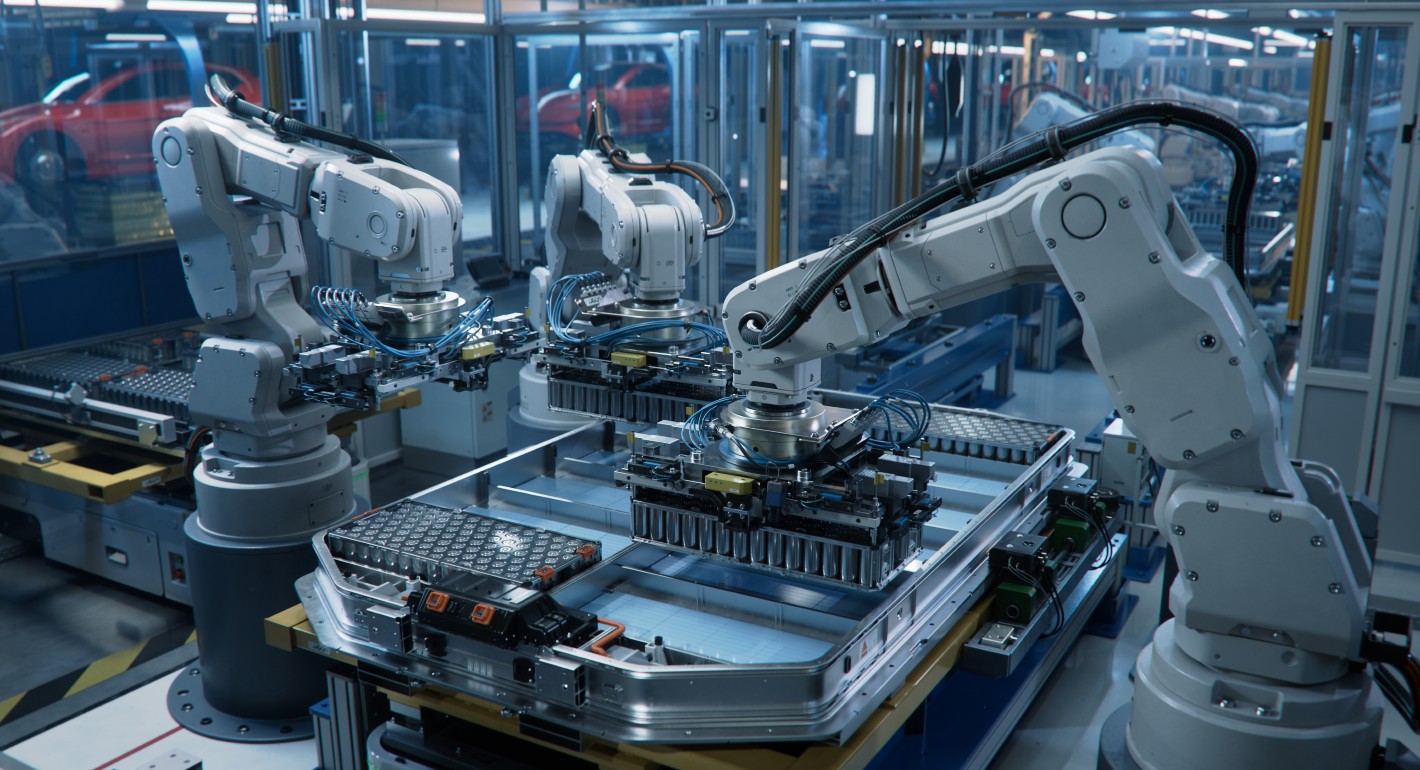
(Photo by SweetBunFactory/iStock)
In an increasingly competitive landscape, Seoul should expand its current partnership with Washington and deepen ties with Brussels and New Delhi.
Korea punches above its weight when it comes to producing lithium-ion batteries. Its three major battery firms are among the top ten global manufacturers and second only to China in terms of global market share. Its battery sector has benefited from close coordination between government and companies, particularly in targeted innovation and investment initiatives. Another core asset is the power of large conglomerates, or chaebol, that work closely with or acquire subject-matter experts and startups to expand competitiveness within Korea and internationally.
But Korea’s silver-medal spot on the battery innovation podium is at risk. As we write in a recent report on battery ecosystems, Korea’s successful approach has also “entrenched structural vulnerabilities,” including the need to import key raw materials and exposure to regulatory and geopolitical shocks. Our analysis finds that Chinese producers have access to unrivaled economies of scale, industrial ecosystems, and coordinated industrial strategy—all of which will make the global battery market more challenging for Korean producers.
Fortunately, Seoul is responding with its own policies, too. The Korean government announced a U.S. $289 million investment in September to accelerate sodium-ion and all-solid-state battery technology as a strategy to protect its industry from both Chinese competition and the slowdown in electric vehicle (EV) sales in some key markets. But to succeed in this diversification strategy, Korea needs not only innovation policies, but also core partners to help scale different parts of the battery value chain and deploy these new technologies. This is a strategy that Korean chaebols have successfully begun in the United States—but this external dimension should be accelerated and expanded, including to Europe and India.
Korea should continue work on battery tech in the United States with a specific focus on active materials—the mixture of critical minerals that are essential to the battery’s function. It also should partner with next-generation startups to cultivate a key place in a cutting-edge and resilient battery ecosystem.
As Seoul has become concerned about U.S. security commitments, it has pivoted toward a broad strategy to leverage industrial capacity and competitiveness to help manage its alliance with Washington. Batteries have been a key part of this move. While initially feeling slighted by the Inflation Reduction Act, Koreans regrouped and expanded investments to spearhead the development of America’s Battery Belt.
Korean producers won out over Japan’s last battery manufacturing giant and myriad American startups to become the dominant player in the U.S. battery ecosystem, which is expected to become second only to China in battery manufacturing. Many of these Korean investments were joint ventures with major U.S. automobile makers, but after the administration of President Donald Trump eliminated EV subsidies, demand dropped. The Korean players have made a sound bet on retrofitting their assembly lines to also produce lithium-iron-phosphate (LFP) batteries to serve America’s booming market for large-scale battery storage on the power grid. This ensures Korean know-how in new chemistries while providing the United States a domestic alternative to Chinese LFP batteries.
Going forward, Korean firms should deepen their U.S. ties by working on active materials and next-generation tech—both are policy priorities of the Trump administration as well as the incoming Democratic-controlled Congress. One key finding of the Carnegie analysis is that the United States leads the Organisation for Economic Co-operation and Development in startups piloting emerging chemistries, but scaling up requires capital and know-how that startups lack. One option to explore is whether Korean firms’ U.S. factories, especially those facing weak demand, might offer assembly lines to U.S. startups (or to jointly scale new facilities, as already underway). In addition, the United States has innovative battery material producers that might benefit from joint ventures with Korean metals giants. Doing so advances Washington’s onshoring goals and Korean market share.
This said, Korean producers will need to navigate challenging years ahead, not just in market dynamics but also political pressure from Washington. Seoul faces tough decisions now over whether and how much more integration into the U.S. battery ecosystem is worthwhile or politically palatable. Washington may be expanding its expectations for Korean investment in U.S. energy development past what Seoul can commit.
Korea should view Europe’s battery conundrum as an emerging opportunity to strengthen industrial ties, science diplomacy, and overall cooperation with the European Union and member states to ensure Korean firms have access to state aid under the proposed Industrial Accelerator Act.
To brace for potential challenges in the American market, Korea should turn to other partners to continue to build out its battery edge. After the United States, European countries are a worthwhile target for Korea’s battery foreign policy—not only for market demand, but also for vital partnerships to promote innovation and supply chain resilience. The European EV and battery storage system markets are expected to continue growing as countries seek greater electrification in their own struggles for energy security, especially amid heightened fuel costs. However, Korean firms will need to navigate a more protectionist and less economically liberal Europe.
The Industrial Accelerator Act, Europe’s clean tech policy that prioritizes products made on the continent, has been pending since March. If or when passed, it will define European battery policy by creating incentives for local and allied battery supply chains to help fend off Chinese imports. Right now, member states are debating what exactly this looks like, and Korea should emphasize the importance of its products as a valuable strategic diversification play for Europe. To do so, the EU must agree that South Korea is included in its definition of “Made in Europe”—a key political question. In the meantime, continuing to partner and invest in European supply chains will buy goodwill in Brussels and other capitals and illustrate the importance of EU-Korea partnerships.
The chaebols might also consider deepening partnerships with European battery firms. Over the past decade, Europe’s battery ecosystem—which has excelled at basic R&D and regulation—has struggled to produce commercial scale. But it has important actors across battery materials and some novel chemistries. The most fruitful partnerships could center around Europe’s next-generation technology such as silicon anode, which is promising but cannot scale without Korean manufacturing expertise, capacity, and perhaps offtake (a commitment of purchase). Europeans need Koreans for manufacturing, while Koreans need Europeans for market access.
Lastly, Korea should use its partnership with the EU’s Horizon Europe R&D initiative to focus on breakthrough battery technology for the long term, particularly game-changing chemistries such as lithium-air—especially as Chinese rivals have revealed that they also are working on this technology. Although Europe has struggled to scale its own battery champions, it still holds an important presence in battery innovation and related patents. Focusing EU-Korea science diplomacy on battery technology is a sound win-win to ensure that Korea can pool research capacity and stay on the frontier.
Delhi presents the biggest challenge and biggest opportunity to Korea’s battery foreign partnerships.
India is at a fundamentally different starting point than the EU or United States, and it needs help scaling up and indigenizing an industrial base for battery production. Ultimately, India’s industrial policy has not succeeded in building a domestic battery sector, but its political ambition is very high. In some aspects, its industrial potential is also high, such as in graphite-based anodes, the part of the battery cell where the energy is stored. Starting in the early 2020s, India put forth subsidies in its Production Linked Incentive program, but much like Europe, it did not have the domestic industries to scale. Today, the government needs to step up its investment and coordination efforts to reduce dependence on licensed foreign technology. Indian firms face challenges in accessing crucial factory machinery from Chinese companies—a risk and an area where Korean firms can support.
The most obvious benefit to Koreans expanding their role in the Indian battery ecosystem is market access. While India’s battery demand is negligible today, it will grow thanks to a rapidly electrifying road transport fleet and a massive solar boom in need of batteries on the electrical grid. Koreans should view Indian partnerships as investments that could be costly and logistically tough in the near-term but will provide access to ecosystems beyond the United States and EU. This will require the two sides working through regulatory issues, such as localization requirements, potentially allowing joint projects between Indian and Korean conglomerates. It could extend beyond just battery cell production and come with specific carve-outs for Korean machinery, the exact technology to which China has blocked Indian access.
Historically, India’s industrial foreign policy and cooperation have been strongest with Japan, centering largely on more resilient supply chains. More recently, Delhi and Tokyo have decided to focus diplomatic and industrial attention on semiconductors, critical minerals, pharmaceuticals, clean energy, and information and communications technology. Korea might look to how Japanese businesses were able to enter the Indian market and create space for Japanese production as an example.
Korean companies are already making strides in that direction. Korean car manufacturers have built research partnerships with Indian universities and battery-makers. Over the past several years, the Indian and Korean governments have pledged to deepen and expand collaboration in tech industrial domains, especially in semiconductors and sustainable energy. The question for South Korea is how the chaebols can build effective joint ventures with Indian conglomerates that work best for both parties and gain access to Indian subsidies.
The battery industry will only grow in the coming years, as access to energy becomes increasingly securitized and expensive and battery applications extend to new sectors. To meet the increasing demand for electricity, countries will look for more reliable and nimble solutions. Korea’s second-place role in the global battery market is essential for balancing industrial power in this critical technology. To capitalize on this position—and maintain it—Korean policymakers should focus on partnerships in the United States, EU, and India, with different strategies toward each.

A deep dive into the policy ecosystems behind battery development in China, South Korea, Japan, the European Union (including some of its member states), the United States, Canada, and India.
Korea has core competencies that allow it to provide quality batteries at competitive prices and efficient timelines. But to realize the full potential of its industrial might in the global battery economy, Seoul needs to simultaneously build targeted and strategic partnerships in regions where it can improve both innovation and manufacturing. This offers gains for both Korea and the global energy ecosystem: It keeps battery geopolitics diversified and competitive by preventing Chinese battery dominance from eclipsing alternatives. For partner countries, it would help them build their own durable ecosystems.
The latest from Carnegie scholars on the world’s most pressing challenges, delivered to your inbox.

Fellow, Asia Program
Darcie Draudt-Véjares is a fellow for Korea studies in the Asia Program at the Carnegie Endowment for International Peace. Her research focuses on South Korean political economy, governance, and foreign policy, particularly the intersection of economics, technology, and geopolitics.

Fellow, Sustainability, Climate, and Geopolitics Program
Milo McBride is a fellow in the Sustainability, Climate, and Geopolitics Program at the Carnegie Endowment for International Peace. His research focuses on the geopolitics of energy technology and innovation, balancing industrial competitiveness, economic security, and decarbonization goals.
Carnegie does not take institutional positions on public policy issues; the views represented herein are those of the author(s) and do not necessarily reflect the views of Carnegie, its staff, or its trustees.
It would provide a golden opportunity to reconsider what success looks like.

Michael Mazarr
Despite public disputes over trade and immigration, the strategic partnership’s foundations remain sturdy.

Sameer Lalwani

It signals a new era of tech diffusion and warfare.

Steve Feldstein
The acknowledgment has sparked fears of a new arms race with China and Russia.

Chris O’Meara

The summit may be remembered as a fatal blunder, when Washington, Beijing, and the AI industry collectively chose ceremony over action.

Jeffrey Prescott