

Podcast Episode
Steven Feldstein joins Jon Bateman on the world unpacked to discuss his new book, Bytes and Bullets, and explain how drones are reshaping wars from Ukraine to Sudan.
Jon Bateman, Steven Feldstein
Tom Carothers, a top democracy scholar with deep ties in Hungary, joins Jon Bateman on a special episode of The World Unpacked.
Invalid video URL
The world is still making sense of Viktor Orbán’s historic election loss in Hungary—a small country with outsized global significance. Why were Orbán’s generational efforts to stack the electoral deck not enough to prevent his landslide defeat? Is this a warning sign for right-wing populists in America, Europe, and elsewhere who’ve modeled their own movements on Orbán’s?
Note: this is an AI-generated transcript and may contain errors
Jon Bateman: Tom Carothers, Welcome to the World Unpacked.
Tom Carothers: Jon, good to be with you.
Jon Bateman: We are talking one day after this momentous election in Hungary. Before we get into exactly what happened and what it means for the rest of the world, maybe you could just share a little bit about your own connection to the country. Because although you're a leading scholar of democracy, you're different than other Western commentators. You actually have deep connections to Hungary. Tell us about that.
Tom Carothers: Yeah, I studied a lot of countries, John, but Hungary isn't just another country to me. I first went there 45 years ago as in my 20s as part of some trips to Eastern Europe at the time. Then I started going back in the late 1990s and got pretty deeply involved in a series of things there, including teaching at Central European University. And I went to the country 40 or 50 times over a period of 15 years or so, ended up marrying a Hungarian woman and spending really a lot time there, buying an apartment there. And we spin. You know, a good two months every year, and during the pandemic, spent a couple of years there. So I have a pretty close connection to the country. I have daughter who's currently in public school there in Hungary doing the second half of seventh grade, and my wife's living there and I'm spending, I spent the last two months there and I'll be going back for much of the summer. So it's not just another country to me.
Jon Bateman: That's a great platform from which we can explore both the big picture issues of the state and future of democracy in places like Hungary and other places where right-wing populists have come to power. But also I wanna draw on the texture that you bring to this conversation kind of at the street level and at the personal level. So let's just start with the election that just happened, undoubtedly one of the most globally significant elections that we're gonna have this year. What happened in this election? What was significant about it? What surprised you about it if anything?
Tom Carothers: Viktor Orbán and his Fidesz party have been running Hungary for 16 years, elected in 2010. They made a hard right turn, putting forward a really, you know, Europe's first hard right agenda in a governing party, and ran the country that way for 16 years, using a super majority they had gained in the 2010 election in the legislature to be able to rewrite the constitution without any public consultation. Rewrite a whole series of fundamental laws, create alternative governance structures that are quite anti-democratic, extreme gerrymandering, et cetera. So they've been driving a hard right agenda and an anti-Democratic agenda. And so their loss after 16 years of this is a watershed for the far right in Europe. And I think it has some implications, which I suspect we'll talk about for the Trump folks as well.
Jon Bateman: Did this election result surprise you? I mean, I know in the last few days and weeks, as an American who follows global affairs, I've started to hear inklings of interest in this election in the sense that Orban could lose. Did you think that he would lose with the landslide that happened, the super majority for the opposition party, the quick concession by Orban? And is that what you expected?
Tom Carothers: Over the last six months, the signs began growing day-by-day, John, in Hungary that something big was afoot. You began seeing it all the little kinds of ways. Our cleaning lady who cleans our apartment there, a loyal Fidesz voter, a typical working-class FidesZ voter who doesn't really have an ideological agenda, but Fides was safe. She always used to say, eh, things are fine here. It's not perfect, but I know these guys. I'm going to keep voting for them. Drove my wife crazy. Election after election. Suddenly, A month or so ago, my wife got up her nerve and said, what are your plans for the election? She goes, I want to vote for the other guy. My wife was flabbergasted. And why? Because you know what? Things aren't so great here. And I'm hearing all this stuff about corruption. The prime minister's father is living in some kind of palace. His best friend is the richest guy in the country. What's going on here? So you begin to see the signs that his traditional stronghold was starting to be lost. And you saw just incredible energy. Coming from the opposition, a different kind of opposition, as we can talk about, using social media with incredible effectiveness, day in, day out, clever messaging, getting people satire, getting underneath the government's skin, the government reacting in clumsy ways, you begin to feel like this is not just another one of Fidesz's roll-throughs. Now, all along the last six months, I've had conversations with Hungarian friends that said, So is it going to happen? Is there going to be a transition? They say time intellectually, yes. A change is I can see it, I can do that but I can't believe in it. 16 years of this guy, they control everything. They're like this heavy cloud over the country. I can get there in my mind and I'm afraid of hope. I'm a afraid of more disappointment. But then it's like the clouds parted and people began to just break through the fear and the depression and say what I'm going to hope. A couple of weeks ago, I went to the two rallies on March 15th in Hungary by the opposition and by the government. And the government rally was full of these older people who've been bused in from the countryside. I went around the corner and saw this line of busses. They bus people in for the day, applaud when the flag is waved. Then I went over to the opposition rally, just teaming with people with energy, people laughing, lining up on the streets. And I just felt like, you know, this isn't just young versus old, heartland versus capital. This is hope versus just gloom and pessimism. And voters everywhere around the world as you know, John, want change. They're frustrated about a lot of things and the government was exhausted. All they could do was campaign about Ukraine over and over again. A message of fear. Ukraine may attack us. We better mobilize our military. They got more and more outlandish in their messaging as time went on. Whereas the opposition stayed focused, believe in a better Hungary, believe in a Hungary you can be proud of, believe you are European. Why are the Russians here and so forth? You know, just a clear Syrian message that they brought home day after day. So by about a week ago, I began to feel like something big is going to happen here.
Jon Bateman: We know a little bit about Viktor Orban. As you say, he has been omnipresent in the Western conversation for 16 years. It's actually kind of amazing that the leader of a modestly sized, not particularly influential, landlocked Central European country has taken on such an outsized role in the news, foreign policy conversations, uh, European politics. The international left versus right battles, just talk about who was Orban on the eve of this election? What did he represent for his country and globally? What was he trying to argue to his citizens that he had achieved for them and could achieve for them? And who was he really?
Tom Carothers: There's a lot there. But let's start with, as you say, John, just the startling fact. Here's a country of fewer than 10 million people, of no strategic significance, of no economic importance, which before the election, the White House, the most powerful country in the world, seemed to be determined to keep him in power. The Kremlin was working hard behind the scenes in some pretty sleazy ways to keep this guy in power, China, you know, quieter as usual in these ways, very much wanted to keep Orban in power? How is it? That the leader of this little country of no strategic or economic significance had the three most powerful countries weighing in trying to keep him in power. What's going on here? So it's a whole series of things. One, as you say, he was an inspiring force for the far right in Europe and ultimately the United States. He was the test case. He was where they were governing 16 years of hard right rule. This is it, folks. So he was the bellwether for the Far Right. Secondly, for Putin, he was the thorn in the EU side. He single-handedly blocked a 90 billion euro loan to Ukraine a couple of months back. He was using the Ukraine policy as blackmail to try to get the EU to release funds to Hungary that had frozen because of his own misbehavior with corruption at home. So he had gone twice to Moscow, the only European leader to meet with Putin in Moscow since the invasion of Ukraine. He went twice, the only EU leader, he went twice. China, the foreign minister of China and Orban's foreign minister met 27 times in recent years. What are they doing meeting 27 times, John? Hungary, first country to join the Belt and Road Initiative, first European country to have an opening to the East, first european country where BYD, the Chinese car manufacturer, is now setting up a factory. It is China's bridgehead into Europe, into the EV market, the first big Chinese battery plant in Europe. Orban was many things to many people. So this election had an unremarkable amount.
Jon Bateman: So help me understand this contradiction, Tom, because it sounds like part of what Orban achieved across this 16 years is he became important to other powerful players around the world. And yet, I think part of the reason why he lost this election is a sense of economic malaise and stagnation in the country. Why was Orban unable to channel this powerful leverage that accumulated. Within the EU system, with Russia, with China, even with Donald Trump, into some kind of tangible success story for the country that he could then use to become reelected.
Tom Carothers: His economic policies, particularly the last four or five years, were really troubling. In his first 10 years, he enjoyed the central European recovery from the global financial crisis of 2010. All central European economies from 2010 to 2020 did reasonably well, and Hungary was one of them. But starting in 2020, things really turned sour for Hungary. The German car industry that he'd bet heavily on, a lot of German car manufacturing in angry. Sort of what Adam too is called late stage, you know, uh, traditional cars, um, no longer so profitable. COVID hit Hungary very hard. It actually had the highest death rate from COVID for quite a while. I was in Hungary at the time of the pandemic, so trust me, I was following those statistics. It devastated their economy. Inflation spiked up above 25% in 2022. Economic growth was 0.4%. Why? Series of reasons Fiscal mismanagement in the 22 election, where he got reelected, he made a lot of economic promises to pensioners, to this group, to that group, that he couldn't afford. And that spiked the inflation. He would do these populist giveaways. Secondly, the constant state corruption and mismanagement. He'd get big EU grants with this or that and a lot skimming off of them, misappropriation of them. Bad project management to cronies and so forth. A lot of mismanagement. The undercutting of the rule of law in the country meant a lot of economic mistakes were being made with no accountability and so forth. So just bad economic mismanagement, John, was really hurting the core project.
Jon Bateman: Yeah. It's interesting because when you hear about a leader corrupting the rule of law, seizing control over economic infrastructure and doling it out to his friends and buddies, these can come with political costs. But I think part of the reason why you do those things is it can actually help you hold on to power, create friends in high places who can come to your aid. So I want to get later to this kind of ultimate question of how could it be that Orban seemingly tilted the system in his favor for so long and so deeply. And yet ultimately met his political end in an election. But before we do that, I want to ask you about Peter Magyar, the opposition leader who will now be Hungary's prime minister with a super majority in public. I think for those of us outside the country who aren't experts, there's a natural temptation to assume this guy must be what the opposite of whatever Orbán was. So if Orbán is right-wing, this guy must be left-wing. If Orban was liberal, this guy must be. Orban was illiberal. This guy must be liberal. If Orban is corrupt, this guy must be not corrupt. What do we need to know about the new leader of Hungary?
Tom Carothers: But you just described it would be exactly the wrong way to try to understand Peter Madyar. Interestingly in the last few months as he's carried forward his campaign, multiple people in Hungary have said to me, he reminds me of no one so much as the young Viktor Orban in his drive, his determination, his singularity of focus. No, I'm serious. There was this incredible moment in the European Parliament, he's been in the came to give a speech and Orban was sitting at the desk and Majaro went over to him and just held out his hand. And Orban sitting down and no opposition person had ever even gotten within the personal space of Orban before. And there was Majaro, this young, vigorous guy. And then there was Orban, the time, 60 years old, frankly a little bit overweight, looking pretty tired, looking like he'd been living off the fat of the land in some pretty happy ways for a while. Yeah. Here's this lean, angry, determined guy. And Orban didn't know what to do. At first he was going to ignore him because that's his normal style. Then he thought, that's not going to look good. So then he kind of put it on his head. Then he started to get up, but Madure was sort of leaning over him, kind of like, you know, Victor, goodbye. And that moment was iconic. It was the start of Madure's campaign. So who is Peter Madure? Fascinating character. Comes from a political family. Grandfather was on the Supreme Court of the country. His great uncle was president of Hungary, not that long ago. So he comes from a political family. He was in the Fidesz machine. He was a young activist in the fetus machine, served in various state level or sort of medium level jobs, you know, typical fetus functionary, married a woman, Judith Varga, who's a rising fetus star. She became justice minister. And so they were, you know a power couple, her more than him, Actually, nobody really knew him. But then critical moment. Fidesz machine makes his wife take the hit for a sleazy pardon that was given to a child sex abuser, a friend of some fetus, you know, cronies. They pardoned this guy. She took the hit. They made her resign and Peter Magyar snapped and how his wife, in fact, they were actually getting divorced at the time, but how his ex-wife was being treated by the his machine. He just something happened to him psychologically. He was like so angry. That this machine that he was part of, he knew how it operated. He said, how dare they do this to my wife? And he sat down soon thereafter for this long video on the main online video site and just said, this is what this system really is. This is, and he just laid it out there with this kind of controlled anger. And he said, and I'm gonna do something about it like nobody else has. In this video, talk about viral videos, John. This video. Within a very short time in a country of under 10 million people, two and a half million views of this video. Basically, probably half of all the adults in the country saw this video in the first month. Imagine a video in United States with 100 to 150 million views, an hour long political video of a guy just talking. It just crystallized this moment. The system was rotting and somebody spoke up. And then the government just came down on him like a ton of bricks. One smear after another, and he just deflected them with incredible agility. And, you know, so they showed some papers that he had signed when he was in one position that implied some corruption. He said, yeah, I probably was corrupt because I was part of the machine. The machine is corrupt. Everybody in it is corrupt, trust me. I know. They blackmailed somebody. They made some hidden cameras in a video in a hotel room and him having sex and he said, guess what? I like having sex. Why is that odd for people in the What does that say about them? He just had this way of deflecting things on social media, and it was a campaign in a state-dominated media. He ran the campaign on Facebook. It was entirely on Facebook and Instagram. Every day, social media videos. He'd walk into a hospital waiting room. All these people sitting there in a terrible hospital, endlessly waiting for doctors who are no longer there because they've gone to Austria to make better money, and he'd say, here I am, hey. How long have you been sitting here in this wedding room? It's terrible, it stinks. Or he'd go to an elevator that's not working and stand in the elevator and go, why doesn't this elevator work? Why does nothing work in this country? Every day, people love these videos. And the government will respond with statistics about elevator maintenance. You know, and it's just like he had them. And he just had them around the throat by a message of you are failing this country.
Jon Bateman: As an American, I can't help but analogize to, you know, more familiar politicians, there's an element of style that reminds me of Zoran Mamdani, someone who's showing up with a kind of raw political talent, an ability to cut through the noise with a perceived authenticity, and a mastery of new media, video, and the politics of performance, showing up somewhere. I think he did like a walk like all the way across the country which is actually something Mamdani did. Now, my impression is the politics of the two men are very, very different. Who is Magyar in terms of the ideals that he represents? And is there any kind of cleavage between what this newly unified opposition movement expects of him and sort of hopes that he will be as a governing leader of the country versus maybe some of the. Principles and connections that he's actually formed in his past.
Tom Carothers: So what he represents ideologically is a new nationalism. He has said to Hungarians, these Fidesz people have claimed patriotism and nationalism, but look how they've run our country into the ground. Hungary is a laughing stock around the world. When you go anywhere in Europe and say you're from Hungary, you have to apologize for being from Hungary.
Tom Carothers: How is that possible, a country that once produced more Nobel Prize winners than any European country and so forth? So national pride, he just talked about, you know, when can we believe in our country again? He always said, I want to represent a humane Hungary, a Hungary that believes in people and which people believe in Hungary. So it was a very post-ideological and non-idealogical message. Uh-huh. Very inclusive. The government was always trying to bait him with culture war issues. There was going to be a big gay pride march and the government is going to ban it, which was very unpopular among a lot of people. And the government kept saying, are you going to go to the march? And he says, yeah, I'm sitting here looking at a picture of the house that the father of the prime minister lives in. Whoa, this is quite a house. I wonder how he afforded it. And they said, but what about the march he goes, I am talking about things people care about. Why do you keep talking about gay people, you know, and so, and then. He just wouldn't take the bait. He wouldn't go there on on the culture war issues. And so he kept, you know, talk about message focus, he just never wavered in that regard. So it was a very centrist kind of center right, if you will. But I don't really like the right left distinction with him. It was a Very inclusive nationalist message, and very different than the traditional opposition. And I think in a way leaves him a lot of flexibility in how he's going to govern anti-corruption Positive nationalism, we are Europeans, why are we taking orders from Russians? These have been his central messages.
Jon Bateman: I can tell in your descriptions, Tom, that I think you're struck by his political skill and some of the strategic choices that he's made, some of that tactical panache that he has shown. This all takes us to some of the broader implications of what it takes for an oppositionist, an outsider of some form or fashion, to wrest back control of a country like Hungary, but maybe another country, That has fallen prey to a kind of burgeoning semi-authoritarian who's trying to tilt the system in his favor. I think for people who don't closely follow Hungarian politics, there's almost a shock to learn that a figure like Orban can be deposed through democratic means. What do you see as the key ingredients here that enabled this to happen?
Tom Carothers: First, he broke the fear. He just put himself out there and said, I'm gonna do this. And essentially he didn't say it in front of me. He was, go ahead and stop me. And he just broke through the fear and a lot of people were talking about, wow, like he's not kidding. He's really doing this. And he would just walk out there, unguarded and just walk around towns. He visited 700 different towns and villages.
Jon Bateman: And what were people afraid of? I mean, you talk about political fear within a country like Hungary. What would that mean?
Tom Carothers: Yeah, they weren't afraid of being, you know, taken away in the middle of the night. They weren't afraid of beaten up. You know, Hungary was within the European Union, but they were afraid of, you're going to lose your job. Oh, your sister has a nice job with the state electrical company. Too bad she might lose it. What did you say again? Oh, your kid wants to go to this university. We're going to have to review that carefully. The system would squeeze people and had ways of leveraging people and making people within the system. That's when he said, when his wife took the hit for the pardon, he says, this is what they do to people. They squeeze them and then they punish them if they don't do what they want. And many, many people had these experiences. They knew what he was talking about. And so breaking this fear was critical. Then second, a broad message of saying, I'm not the traditional opposition, I'm different. I'm trying to recapture Hungary for the Hungarians. And And culture war issues and ideology is not what this is about. This is about national pride. This is corruption. Look at the disgustingness of this corruption around the prime minister and his family and his friends. And it's about the fact that our hospitals don't work, that there aren't enough teachers in our schools, that our public transportation is decaying in various ways. Just daily issues he would hit upon, and that conformed to people's reality. So it's breaking the fear. A clear, inclusive message, and then a relentless focus on bread and butter issues that people could relate to, and together with what you said, a relatability. He was just so clearly not a manufactured, slick guy. He just a guy making these videos. He's funny. He was sometimes a little, slightly odd sort of guy. A few people said, is he a little on the spectrum here? But there was something about him. He is just so determined and which is kind of relentless in a country that had really lost hope.
Jon Bateman: Political systems like Hungary under Orbán, they're kind of vexing to understand or even talk about. You'll hear terms such as competitive authoritarianism or hybrid regime, sort of unfree democracy or kind of failing democracy, backsliding, all of these terms that are attempting to capture the idea that, formally, it's a democracy. Substantively, it doesn't feel quite fair. The deck has been stacked in some way. It's kind of in this middle category. Help us understand what were the characteristics specifically in Hungry that made this work? What were the tools that Orbán developed to tilt the system in his balance, just concrete things that he did? And what were the limits, the things that he would be unwilling to do that you might see in a more authoritarian regime?
Tom Carothers: Were four or five foundational elements of Hungary's very constrained democracy or electoral autocracy, as political scientists like to call it. First, tremendous control of media. He had control of television, radio, and controlled the media space. Secondly, he'd undercut judicial independence in the judiciary through a whole series of means and had a lot of the judiciary and has beckoned call. Third, he was using state resources for partisan purposes at every electoral campaign. He was clearly spending state money on massive, you know, campaign spending on posters and on advertising and, you, know, broadcasting and soap buying influencers and so forth. So misusing state resources. Fourth, he controlling a whole series of other cultural institutions. He rejiggered the ownership of public universities to exert political control over universities. You went to the theater, the theater directors had all been replaced by Fidesz cronies. My daughter goes to a public school and it's kind of a nice building that's a little bit shabby, but just, you know, a mile down the road is another public school with a beautiful building. I said to my wife one day, why is that public school so much nicer than our daughter's public school? And she goes, well, you notice that has a Catholic word in its name. It's a Catholic school and he's using Christian nationalism. If you're a Catholic school, you get a lot more resources. And they know that the director of our school is not so much known as a friend of the government. They're bringing political punishment down to that level of using the state resources to squeeze people in institutions, cultural institutions, educational institutions and so forth. So the system was everywhere. It was oppressive, but not repressive. That's what's hard to understand. They weren't beating people up in alleyways. They weren't locking people up. They weren't deporting people. There were limits. This is a country in the European Union. They weren't stealing the elections, but they were winning them. I didn't mention the extreme gerrymandering of the system that they had also done and creation of bodies like an oversight over the budget by a budget council that has nine-year terms on it. So if a new legislature comes in and they want to pass a different budget, this budget council run by a bunch of fetus cronies has to approve it. That created all of these. Sort of extra institutions on top of the traditional institutions. So competitive authoritarianism, right, it's a rather confusing term. It's just when you have an elected government that has begun to dismantle democracy by undercutting all of the independent institutions in it and exerting a political stranglehold on them.
Jon Bateman: One of the things that happens along this journey is that the people who are aligned with the ruling party or are apologizing for it in some way will kind of deny that anything special is happening. I mean, you see this in the United States under Trump. There's a whole course of people who will say, well, this is just the way the game is played. Elections have consequences. A new leader comes in. He's just using the legal tools that he has available. He's acting under the Constitution. He's exerting powers that he's been given. And by the way, when you guys were in power, you guys we're also doing things to tilt the system in your favor. And I think we know on some level, governing parties try to assist themselves in ways big and small. How do we draw the line? And what is your message to someone who sees something like this underway. In a country like the United States, India, Israel, you know, another country, and it just says, this is just normal politics. There's nothing special about this.
Tom Carothers: Well, we have to be pretty careful about what our standards are and making sure we hold to them. So for example, when a government begins undercutting judicial independence, politicizing legal institutions, prosecutors, and judges in ways that they haven't before, that's a serious problem. Attacking the electoral system. Extreme gerrymandering here. I mean, every single district was gerrymander it in the favor of the government and that an electoral system was put in. It's a very complicated one that favored the government in various ways, undercutting an electoral or distorting an electoral system, under cutting independent media, attacking independent media. That's an anti-democratic thing to do. If you're attacking independent, that's an antidemocratic thing to So, yes, governments work to be popular. They work often to steer state risk. Dear state resources towards projects they think the supporters are gonna like. You're right, they do. That's not fundamentally anti-democratic. It's kind of sleazy governance in some ways, but attacking independent judiciary, attacking the electoral system, attacking independent media, and down that list, that's anti-Democratic, and we need to be clear about the difference between that and simply leaning towards sort of a certain partisanship, my things, and also destroying the independent civil service. And vitiating the concept of independent civil service or independent agencies, thoroughly politicizing. So I think we can draw those two things to John. If we can't, we're in trouble. But I think it is possible to do so.
Jon Bateman: I think we are in trouble, Tom, and that's part of why I'm asking the question. And just to draw you out on this, because I know you think deeply about these issues as a democracy expert, there's elements of a classic liberal democracy that are kind of counter-majoritarian, right? Like the idea of independent courts as almost a ballast, maybe holding elected leaders accountable. And so when you know a figure like Orban or Trump comes in and starts attacking the courts, he can often make an argument about what he's doing that he would cast as a form of democracy itself, that actually I'm taking power back on behalf of the people against this un-elected cast. Same thing with gerrymandering. It can be a very slippery thing to attack because there doesn't seem to be a single scientific standard that we can point to for. How an election should be run, and so this gives a huge amount of kind of gray space in which bad actors can kind of manipulate and slide things around and just say, oh, this is just normal. How can we clearly define the moment where, or do you have a sense of where historically and in Hungary, the line was crossed and to come back from that.
Tom Carothers: Look, John, you know, in a democracy, there are two big constraints on power, because democracy is at root, a system for constraining power. Go back to the Magna Carta and, you knows, trying to constrain royalty of that time and to the modern era. Democracy is the long evolution of constraining and you do so in two big ways. One is through law, the concept that law trumps political power, that law is something that. Everyone has to obey, no matter what their position, and secondly, you do so through the popular will. And if you attack those two things, you come in and say, law is constraining me, that's anti-democratic. No, that is wrong. Law is a fundamental element of liberal democracy, and if you start to say, I don't like that judge's decision, he's an idiot, let's not listen to him and just do what we want anyway, you are not respecting the idea that law constrains power and advocacy. You are not democratic. And secondly, if you begin constraining elections and saying, I did not, you know, it should, it shouldn't be so easy for people to vote. Why is it so easy? For people to go, I'm sure people are cheating. Let's make it a little bit harder to vote or let's create systems where individual votes don't really all matter equally. And these people voters, I carefully designed it. So these people's vote counts for a lot more than those people. Or I deny that outcome. And I'm, sure there was fraud and we should overturn that. If you deny popular will. You're anti-democratic. Those are the two big constraints. And so that's what illiberal strongmen when elected to power try to do. They go after the courts, they, you know, turn prosecutors into partisan actors and they begin to go after the popular will by constraining elections, making it hard to run against them, using state resources to overweight the election in their favor, undercutting independent media where those people can be heard. So you can trace everything back to those two big things, John. If you don't respect law as a constraint on power, and if you're beginning to manipulate the system so that the popular will is not exercised, you are anti-democratic. And that's what they're doing in so many countries around the world.
Jon Bateman: You used the term liberal democracy. Orban famously described his vision for Hungary as illiberal democracy. I was struck by the brazenness of that. The idea that he seemed to be articulating a vision for a different type of democracy that would be taking on all of the sacred cows that you just identified, Tom. And... What kind of role did Orban come to play in the kind of international movement of right-wing populists? We know that figures in America and other countries would travel to Hungary, do media hits there, seem to take it as some form of an inspiration. Could you explain that?
Tom Carothers: Well, he came to power and then he began to win elections 2014, 2018, 2022. So first, he was the first hard right leader to come to power and stay in for a sustained amount of time and win multiple elections. So people said he must have the formula. Now the formula was, yeah, undercut the electoral system, undercut, the judiciary, use state resources, under cut the media. And so the recipe was anti-democratic, but people, he always explained and said, no, my immigration policies are so popular. It's like Putin always saying, I'm so popular. Well, if you're so popular, why do you have to beat everyone on the head who dares voice a word of opposition to you? Apparently, you're a little bit more insecure than you claim to be. So he was always saying he was so popular but he had all of the cards and he was playing them all the time. But the hard right in Europe, the far right in in Europe loved to see somebody who had appeared to succeed. And in the United States, you know, he bet big on Donald Trump. July, 2016, Donald Trump was running for president. Orban was the only European leader at a time when most people thought Trump was going to lose. Year and then it's in the year. Orban endorsed Trump. Trump never forgot that. He loved that. As a result, Orban got a visit to Washington in 2019, the big handshake with the president in the Oval Office, which he'd wanted so much. And then when Trump and his crowd were out of power, they really began to venerate Orban and say, he's the model. The head of the Heritage Foundation said, he is the ideal European democracy. He is the model for all of us. 2022, the CPAC conference in Budapest was a love fest. And they went and said, learned at the feet of the Hungarian masters, Tucker Carlson made us famous trip to Budapeste and just couldn't get enough of Orban. And they began in those years to say, that's the magic we need to harness for our comeback to power. And so, you know, Orban became like a cult figure in Maga, really just an extraordinary level of adulation. You probably don't remember in the debate between Donald Trump and Kamala Kamala Harris accused Trump of not being, she said, leaders around the world didn't like you when you were president. Trump said, that's not true. And then she said name one who liked you. Now, Trump could have said Putin, but nah, probably not the right one to mention. He might have said Netanyahu, but that was right during the Gaza war and I'm not sure how that would have played. So what comes to his mind? Victor Orban. And he says, Victor Orbin, love me. And he goes, he's a very strong leader. Trump always uses the word strong when he describes it. Anti-democratic leader he admired. He's a very strong leader of all of the 200 leaders around the world. Who does Donald Trump think of when he thinks somebody loves me out there? Victor Orban. Amazing that the leader of this small country was playing this role in the MAGA movement. Now, of course we have to question what that role will be going forward, but we could talk about that.
Jon Bateman: It's still head spinning to me that we have heads of state in different countries endorsing each other in their domestic elections. I mean, it's still very strange and shocking to me, but it seems like something that has become normalized under the Trump era. So not only did Orban endorse Donald Trump in his elections, but Trump and Vance actually traveled to Hungary to get on the campaign trail and stump for Orban. Did that actually play well in the country? Were Hungarians excited to have a top American leader come? Or does that actually just in some ways undercut the notion that Orbán and his movement were kind of nationalists and patriots?
Tom Carothers:Well, it wasn't just, I'll come to that in a sec, but you know, in the park, just a block and a half from where we live in Budapest, a couple of weeks ago, there was this festival of right-wing figures from Europe coming to embrace Victor Arbonne, Matteo Salvini, the deputy prime minister of Italy was there, Wilders, the famous hard right figure from the Netherlands was there. Marine Le Pen was there from Austria was there they were all coming into Budapes to We love this guy. I mean, it is The far-right solidarity and willingness to intervene, as you say, is extraordinary. But you're right. So Donald Trump, twice between January and the election on April 12th, offered Orban his, quote, complete and total endorsement with a lot of capital letters in that. Rubio went to Budapest in January and talked about the extraordinary friendship between Donald Trump and Viktor Orban. And then, of course, JD Vance arrives on the Tuesday before the Sunday election, just before he went to Pakistan. Went to a pro-Orban rally and said the fate of Western civilization depends upon Hungarians re-electing Orban. What? Really? So what effect did all of this have? Very, very little. Very little. No apparent effect. Why? Well, first of all, the election was being decided by people like my cleaning lady, you know, sort of saying our hospital is not working anymore. There's no doctors. They don't have supplies. She wasn't thinking about Who's JD what? She doesn't speak English, she doesn't care about some guy flying in from America to say what. So that card, when they played it and they played hard, proved to really not have much value to it. Because also Orban had sort of presented himself as the peace candidate. Over and over again he said to Hungarians, I'm keeping this out of the war with Ukraine, I'm peace, peace, here comes JD Vance, but wait a minute, there's a war in Iran, Well, he's the peace guy he's just busy, because he's about to try to negotiate the end to a war that they started with Iran. But trust me, we're all about peace. And so the war with Iran is not very popular in Europe. And so for the Trump people to be laying on thick with the peace candidate in Budapest at a time when they're pursuing an armed conflict with Iran really didn't play very well. But just more generally, Trump is not really popular in European. He imposes tariffs on Europe. He disses Europeans all the time. He makes fun of their militaries and says they're useless. He says they are in terminal decay. He says, one bad thing after another, Europeans. And he says, oh, by the way, and elect this guy. I really love him. He's not set himself up well to be influential as an endorser of European candidates.
Jon Bateman: I have been puzzling for the last couple of years now about this notion of an international right-wing populist movement and whether it's a contradiction in terms, right? So you've got people like Trump who are trying to lift up figures like Orban or Bolsonaro in Brazil and say, we're all kind of in this together. We're all participating in a common project. But then, of course, for many of those leaders, the common project is cast in terms of the nation, restoring the kind of dignity and strength of the individual nation over and above international movements and forces and globalism. So there seems to be almost a kind of globalistic nationalism or a nationalistic globalism that is kind of perplexing and I think is maybe hard to take to voters. Or do people kind of ultimately see the contradiction in that? That someone like Orban is saying this is all about Hungary and its interest in national pride and yet we're inviting these foreign leaders from every country under the sun to come and, you know, kind of influence the election.
Tom Carothers: They try to square that circle in two ways, John, first by saying we have a common enemy. It's the globalists. Those globalists, whoever they are, the globalist, we're against them. And so first, they try to say we have the common enemy that unites us. And second, they say that it's every country for itself. It's dog eat dog out there. This is the age of nationalism. We all get that about each other and we all respect that with each other. When Rubio was at his press conference in Budapest in January, he has asked question and said how do you feel about the fact that Orban is, you know, pretty friendly with Russia and pretty friendly with China? Which is a bit uncomfortable. It was a bit puzzling. Why is Trump's best friend in Europe, Russia's best friends in Europe and China's bestfriend in Europe? And Rubio said, well, you, know, we expect every country to pursue its own interests. That's what we're about too. In other words, it's all America first, Hungary first, France under, you Marine Le Pen and, you know, the far right there. They would say that we're all in it together, pursuing our nationalism in our own individual ways. So that's how they tried to square the circle. Common enemy, common platform nationalism, but it is uncomfortable. It's very uncomfortable because it's a weird kind of solidarity. I don't want to draw this historical analogy in any too precise of a way because it sounds inflammatory, but if you think back to the fascist axis in the 20s and 30s of Italy, Japan, and Germany, It was an uncomfortable access. Um, because they were each movements of national supremacy and national conquest, but enough, but you know, Japan was far off there and so it didn't threaten, uh, Hitler's imagined empire. Italy didn't because they seem pretty useless to Germany and they didn't expect their attention was turned more to the South anyway with Ethiopia or wherever. Um, but it wasn't really, you know a match made in heaven among those three leaders because they were each, you know, that I'm not saying. That the far right of today are fascists. Many of them are not. There's some fascist elements at the extreme edges of that moment, so I'm not making that analogy, but I'm saying Uber nationalists do have trouble forming into kind of real alliances in that sense.
Jon Bateman: Yeah, and you can go through these sort of rhetorical gambits to try to kind of soften the contradiction. Or you could go back to the axis of World War II and say, at least by the end of the war, none of those countries were really democratic anyway, and so they didn't need to really justify this to anyone. But if we're talking about these kind of hybrid regimes or competitive autocracies, you do kind of need to justify it to the a little bit. And there just does seem to be something curious about a Rubio or JD Vance, for example, lifting up the AFD in Germany and saying, we're all part of this common project against the globalist. But by the way, we, the Americans, want Germany to build up its military so that it can take responsibility for its own security. And the AFP does not want Germany to do that. So the rubber reets the road in some respect.
Tom Carothers: That's happening now. It's happening in real time in Europe. The far right in Europe is trying very hard to square a lot of circles with Trump, because Trump is really unpopular in Europe, and they know that. And so they don't want to get too close to him, yet they think he might help them in certain ways. It is very tricky on the Russia-Ukraine issue, it's very hard on tariffs for them, etc. And you've seen them modulating the War is very unpopular. Yeah. You see this with the French, the far right party, trying to figure out how to position yourself, the AFD, et cetera. So you're right. These are very murky waters right now, and it's hardly some, you know, big love festival in which they're all singing kumbaya together. It's actually very murk-y and com-
Jon Bateman: Yeah. I think this brings us back to where we started the conversation and I asked you, why do we spend so much time talking about Hungary anyway? It's such a relatively insignificant country and your answer, which I think is spot on is, it is part of a vanguard of other political forces that we see elsewhere in the world and in more significant countries. And so it's a bit of a test bed. So if you're Donald Trump or Prime Minister Modi in India O R Bukele in El Salvador, one of these other kind of insurgent right-wing leaders that is behaving in ways to kind of erode democratic norms and checks on your power. How shaken are you by this Hungarian election? What concretely does it say about your own political strategies and prospects? And I know I've mentioned just four different countries there, three or four, but what What can be learned from this about the staying power of right-wing populist, illiberal forces in kind of mixed democracies.
Tom Carothers: Well, I think the main message for these leaders is that those who are relying upon essentially culture war bluster as a way of mesmerizing the population and saying love me because I'm keeping these people out of the country or I'm not allowing transgender kids to in this square. Or making sure that women are women or men are men, these things are not enough to sustain a governing project over the long term. Voters are gonna look at their economic performance. Guess what? We've known this for decades in democracies and it's coming home to roost hard in Hungary. Secondly, corruption, you know, the kind of as they expand their power, absolute power tends to lead to absolute corruption. You know, corruption is an intrinsic part of that governing style because of the sort of crony capitalism that's intrinsic in it. And corruption comes home to bite. I just published an article on how anger over corruption is continuing to drive global politics, where I talk about a series of leaders who were booted out of power in the last year because of corruption. And so, you know, it just reminds you of that lesson as well. So economic performance, you ultimately is more important than culture war bluster. Corruption comes back to bite you. Day-to-day governing systems are critical. And also above all, exhaustion sets in. Constant messages of hatred are tiring, John. It's sort of fun for a while for some people to have a hate fest, apparently. I don't know why, but apparently it is. But 16 years of hatred, it doesn't work very well. People just become like, the message is always hate this, hate that, fight this, fight that, fear this, fear that. People would like to know what, where's the fun in life? Where's the positive vision? Bolsonaro ran into this by 2022. He'd only been in power one term and Brazilians were like, do we have to keep living with this hatred all the time? And so that is the core message is this, a populism built on the hatred of the other and divisiveness and continual sort of, you know, positioning oneself as the holder of all the cards and that the one staving off the evil from the other people. Just wears people out.
Jon Bateman: At a base level, what you're saying sounds incredibly optimistic, if I may say so. I think people that- Well, there's one.
Tom Carothers: Well, there's a lot of damage along the way, John.
Jon Bateman: Okay. Yeah, so pull me back from the brink of optimism. What I was going to say is, I think a lot of people in the last decade or two have lost faith in liberal democracy in the sense that in some countries, in some contexts, no longer seems like there's a kind of core connectivity between the material interests of voters and kind of who wins and who is in power. What I'm hearing from you, Tom, is that on some level, the system can only become so disconnected from the people in their interest for so long, unless you go full-blown autocratic, that if you allow the country to descend into economic malaise and kind of corrupt chaos, that will catch up with you, that there's a kind of clock ticking on all of the different manners in which you could try to kind of keep the people at bay. Is that fair, or am I overstating the case?
Tom Carothers: I think that's right, and what happens, John, with these competitive authoritarian regimes is some of them, faced with reality biting back hard, start to repress. And move down a road of repression. Like Georgia, they began just repressing. Faced with an election, they basically lost. They just turned on the repression, start beating people over the head, detaining them. Belarus goes from being somewhat competitive authoritarian down the road into closed autocracy. Russia used to have some space in Russian society. Tighten all those screws because people are getting unhappy. And so unfortunately, in many of the countries, It's just increased repression. Hungary was unusual in that he had a hard right regime in a context, the European Union, where there were still some standards and norms that he didn't really dare cross. If he'd started killing people in the middle of the night, you know, he might have been kicked out of the European union and he couldn't survive without EU structure.
Tom Carothers: specifically. Hungary is owed 30 billion euros in EU funds. You might think, well, that's some money. If that were the US economy, that is well over a trillion dollars. Hungary needs that money. And so the choice of many competitive authoritarian leaders, unfortunately, is repressed. And that is what we are seeing, the tightening of the screws in many authoritarian contexts. Why has China become more autocratic in recent years? Because she knows he needs to just really push all dissent off the stage. Why has Russia, why did Iran kill all of those protesters? That's unfortunately the reality. But fortunately, there's some countries where that just isn't done or not done enough, whether it's Senegal, where they're able to push back against this, Zambia, where they kicked out a pretty bad leader, Poland and Hungary and some others. So it's the amount of repression that's also critical. And I hope the message that people don't take away. From the Orbanus experiences. He should have just cracked some heads. He should have, you know, disqualified Peter Magyar and put the guy in jail and, you know, live with the consequences. But they never did that.
Jon Bateman: Yeah, it sounds like when you get into this middle space in between democracy and autocracy, at some point, you may approach a tipping point where you need to choose which side you're gonna be on when your regime or ruling party is under pressure. Do you stay still on the kind of democratic side of? You know, or do you just push the gas pedal and just keep going? Are there countries in the world right now where you see as close to that tipping point of, you know if under political pressure, they could just push the gas petal and go all the way toward Russia, China, Iran.
Tom Carothers: You know, there was a great article written in 2018 called The Surprising Instability of Competitive Authoritarian Regimes, posing just that choice, saying they're on one side or the other. They either go down the full authoritarian road, or they just liberalize when reality bites back against leaders. It's actually written by Carruthers, not this one, by a guy named Christopher Carruthiers, who happens to be my son, who, you know, I inherited the genes of comparative politics. Great article in the Journal of Democracy. And talks about this fact that competitive authoritarian regimes are not as stable as we might think they are. They tend to veer down one road or the other. You know, where are there countries today that might be on a precipice? Look down, you know, we're in United States, and people are wondering which way is this project going. How strong are the constraints on power? I don't think Donald Trump and his crowd want to move the country towards full authoritarianism, not at all. But they do want to keep pushing on the system. He keeps targeting independent media sources with lawsuits and harassments. He keeps bad mouthing judges. He keeps undercutting parts of the civil service and independent agencies. They do keep pushing this envelope. And the question is, how strong are those constraints? And what is the popular will against it and so forth? So I don't think it fits what you described as a country that might just go down the road to full authoritarianism, that it is very much on the cutting edge of this question of what are the limits here, of what is gonna constrain this power, and what is the alternative?
Jon Bateman: It makes me think, and again, push back on this, Tom, but it makes me thing for a country like the US, I mean, we just have to focus on the US to some degree. It's the most important country in the world. It is going on this journey, you know, at some former fashion. And the fate of the US political system is gonna affect everything around planet Earth. And if I'm, what I'm understanding from you is correct. There's a kind of race happening. Where on the one hand, figures like Trump and other illiberals in the United States are continuously pushing the envelope to see how much they can tilt the system and erode democratic checks in return for political power. On the other hand, those actions often come at the expense of material wellbeing of citizens and the interest of the country. We see right now rising inflation, huge economic damage from the war in Iran, seems like a classic case. Of kind of leader overreach, right, that kind of creates some political blowback for that project. And so kind of which of those two forces is going to win, which of these two races has run to completion faster. Is that a fair way to understand it?
Tom Carothers: Let's go back to what I said, John, about what are the two big constraints on power and democracies, law and the popular will? And both of those are at issue now in the United States. Will our legal system hold against the pressures that are, you know, unprecedented pressures that have been put? You know, never have we seen a president criticize judges. Never have we see an administration try to get around the legal system in various ways to politicize prosecutions in the ways they have, to carry out, you and legal form. So will our legal system, I think it will, but it's a battle. And secondly, the popular will. Why are the midterm elections so important in the United States? Because they're the first big test of the popular will in the face of this project. And there is pressure from the administration on the electoral system. We see it with Donald Trump with his various ideas about mail-in voting and this and that. He does immediately want to go after the electoral system and try to see if he can soften it in various ways. So we're back to fundamentals here in our country, things that we took for granted. We took for grant for many, many years that our legal system was, in a sense, politically untouchable in a deep way that it would hold and that the popular will would be respected. We've never had somebody elected to power who refused to admit his obvious defeat in a previous election. That's unprecedented. The denial of the popular will. Attempting to deny the rule of law in various ways. So we're back to these two fundamentals and that's where we have to keep our attention focused
Jon Bateman: You've been very generous with your time, Tom. I want to give you the last word. What would be, you know, a takeaway that you could offer from this election to people in Hungary, people in countries like Hungary, and people in other countries that are watching very closely where this bellwether state is going to head in the years to come.
Tom Carothers: Power of a single individual to drive change. It is astonishing when you look at what Peter Madure has done. I'm not trying to venerate him and hold him up. He's highly imperfect. He could prove to be a very flawed leader in various ways, but his campaign was one more example in the world of an individual who just says, enough, we can do better than this and just won't give up until he achieves at least the start of that That's impressive. And I think we have to respect that. We've seen it in our own system various times. We could name various political figures in our system, But we have to remember that's possible even in a situation where all of the odds seem to be stacked against them
Jon Bateman: Hmm. Fascinating. Thank you, Tom. Really appreciate it.
Tom Carothers: My pleasure John, good to talk to you.
Carnegie does not take institutional positions on public policy issues; the views represented herein are those of the author(s) and do not necessarily reflect the views of Carnegie, its staff, or its trustees.
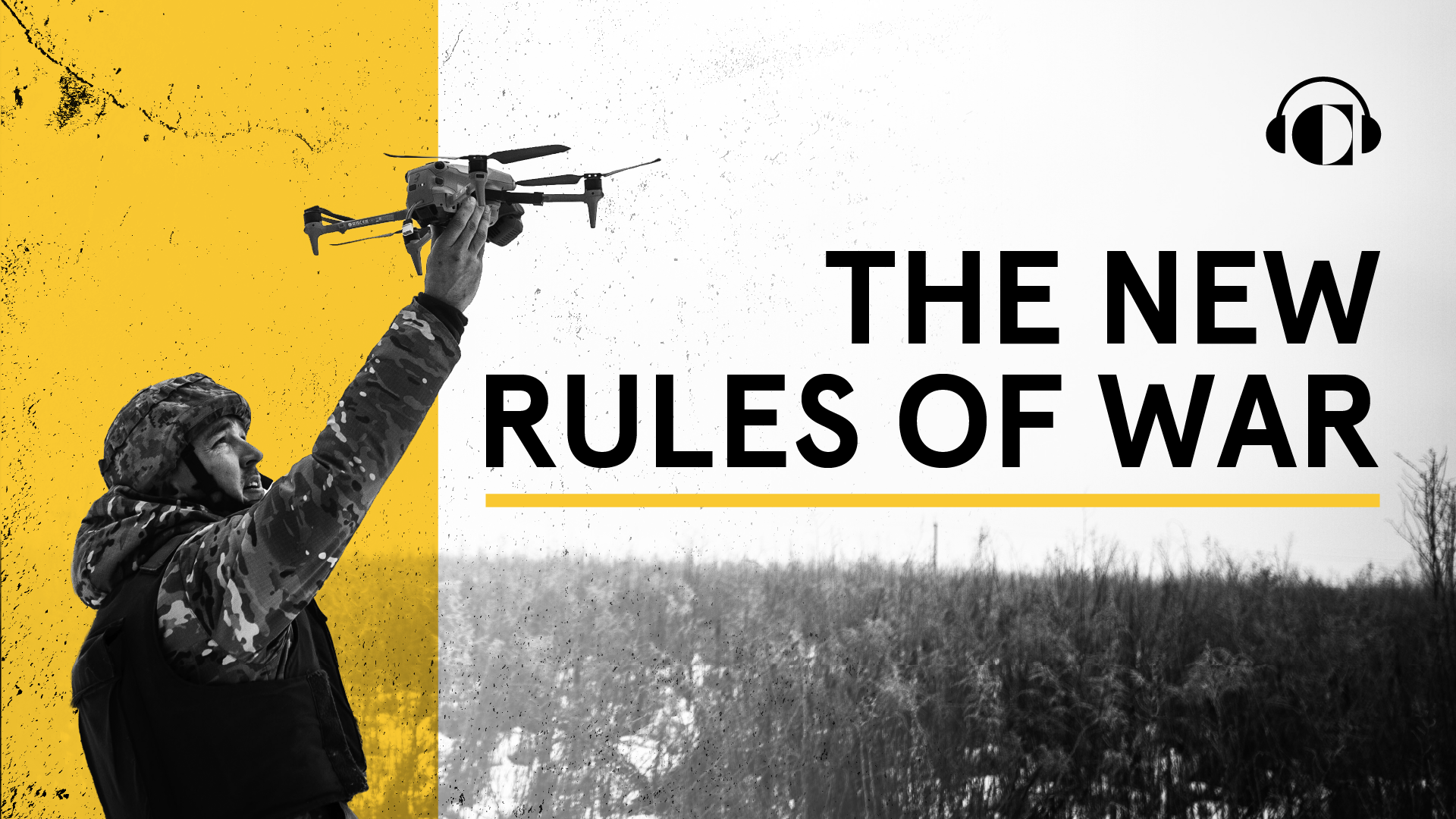
Steven Feldstein joins Jon Bateman on the world unpacked to discuss his new book, Bytes and Bullets, and explain how drones are reshaping wars from Ukraine to Sudan.


Jon Bateman, Steven Feldstein
A new book goes inside the AI industry and calls for a mass movement to restrain it.

Jon Bateman, Garrison Lovely

An ex-head of the Secret Service in his first-ever podcast on growing threats to U.S. leaders.

Jon Bateman, Ronald L. Rowe, Jr.
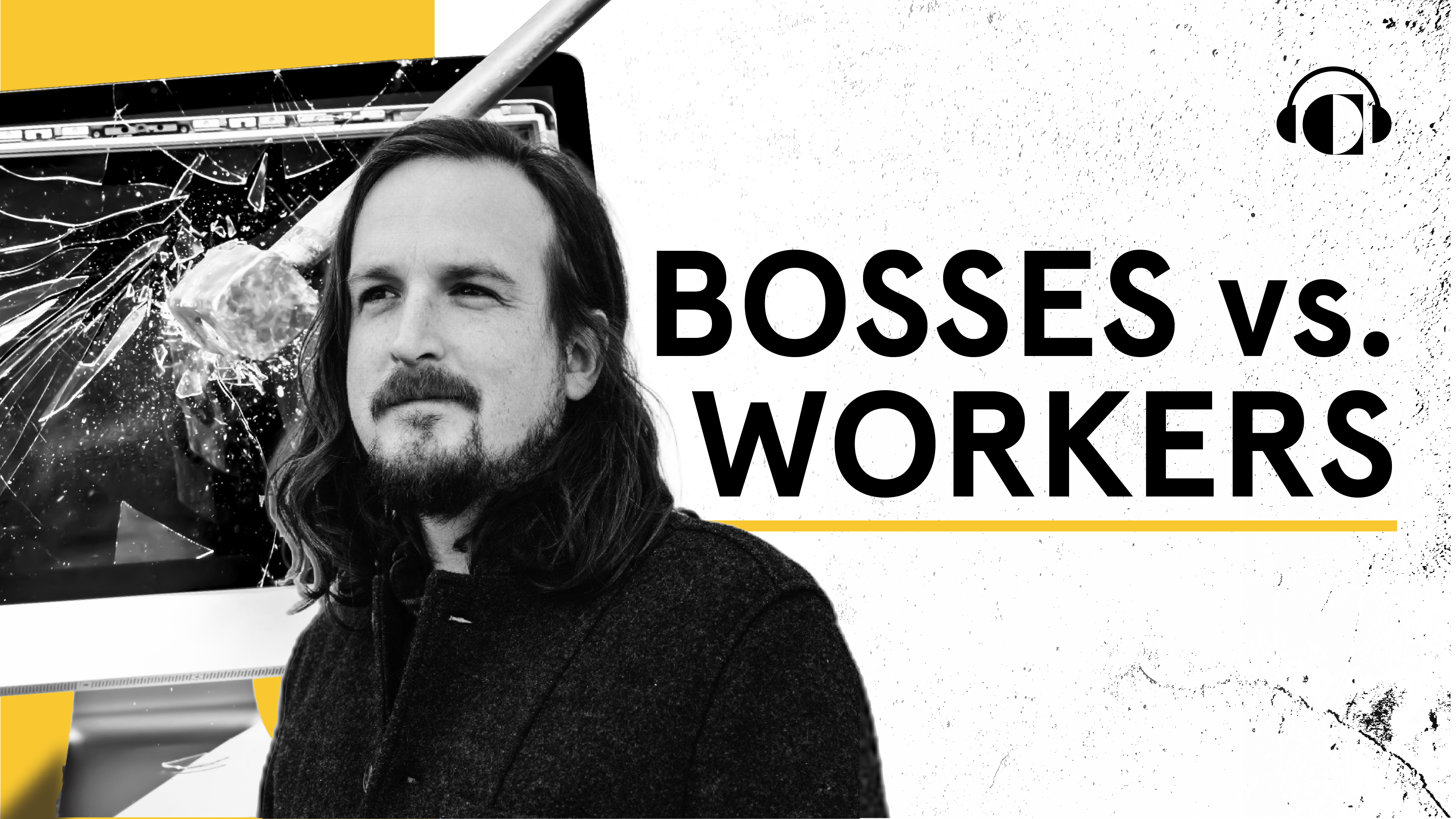
Brian Merchant on the Industrial Revolution’s failures, how AI undercuts workers, and the social order of technology.
Jon Bateman, Brian Merchant

The missing context that shows how AI isn’t the resource hog everyone thinks it is – with Andy Masley.

Jon Bateman, Andy Masley