

Article
If Indigenous land and water dispossession is ignored, climate adaptation strategies risk reproducing inequalities and worsening acute climate vulnerability.
Frederic Wehrey, Charles H. Johnson
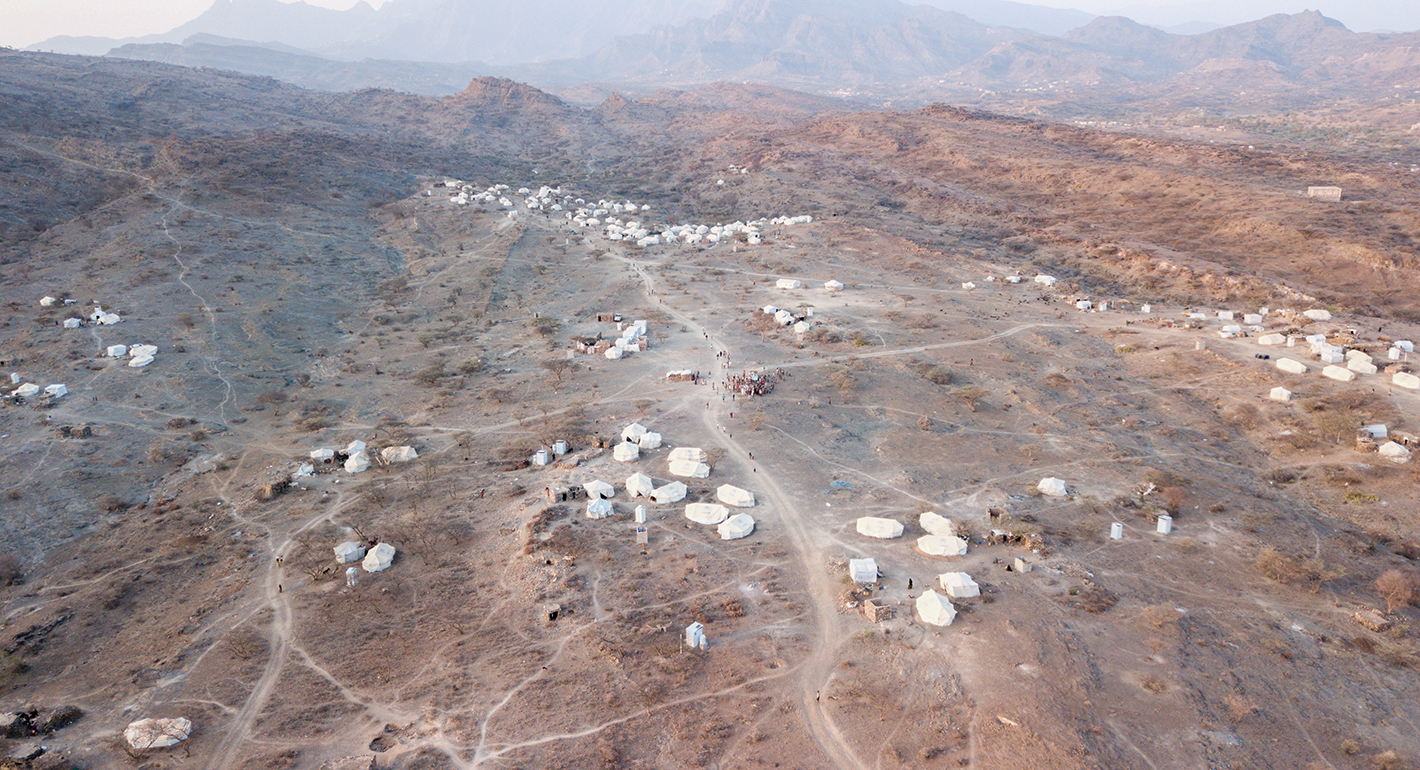
Source: Getty
The world’s climate adaptation funds must adapt to address the ways that climate change is deepening state fragility.
Yemen is one of the world’s most fragile states. A decade of war has fractured authority, degraded infrastructure, and left millions dependent on humanitarian assistance. Yet fragility in Yemen is not defined by conflict alone. It is also shaped by accelerating climate stress that interacts with weak institutions in ways that deepen vulnerability and complicate recovery.
Climate change did not cause Yemen’s war. Political exclusion, economic mismanagement, regional rivalries, and armed mobilization preceded the current phase of violent conflict that began in 2014. As temperatures rise, rainfall patterns change, and extreme weather events become more frequent across the Middle East, climate stress is no longer a background condition, however. Across the region, warming has surpassed the global average in recent decades, with increasingly intense heat waves becoming more common (see figure 1). And precipitation has also decreased compared to global averages (see figure 2). In Yemen, these pressures unfold within a landscape marked by territorial fragmentation, damaged service delivery systems, and contested control over infrastructure. Under such conditions, environmental stress does not simply add to existing governance burdens; it entrenches instability and directly impacts the way recovery and peacebuilding efforts must operate.
The convergence of climate stress and conflict is most visible in Yemen’s water crisis. The impacts of variable precipitation and rising temperatures are not solely environmental, they are also political. Long-standing governance failures, distorted agricultural incentives, inequitable access to aquifers, and the declining influence of traditional resource management practices have transformed access to water into a source of tension and instability. Control over pumping systems, fuel supplies, and distribution networks remains contested in many areas. The destruction of water management infrastructure and the loss of technical capacity complicate both access and essential maintenance of surviving systems. As climate change accelerates the depletion of aquifers and increases the variability of precipitation, the cost of maintaining even minimal service provision rises.
The consequences cascade beyond water systems. Food insecurity in Yemen is shaped by import dependence, fuel prices, currency volatility, and market disruption while also being increasingly sensitive to rainfall variability and flood-drought cycles. Public health risks, including recent cholera outbreaks and other waterborne diseases, are closely tied to the integrity of climate-sensitive water and sanitation infrastructure. Overlapping pressures from insecurity, livelihood collapse, and environmental shocks have internally displaced millions of Yemenis. Women and girls endure a disproportionate share of these consequences as water and fuel collection grows more difficult and access to health and protection services narrows under conditions of displacement and environmental stress.
Environmental stress does not simply add to existing governance burdens; it entrenches instability and directly impacts the way recovery and peacebuilding efforts must operate.
Climate finance plays a central but often underexamined role in shaping how countries respond to these pressures. Broadly defined, climate finance refers to public and private financial flows that support mitigation and adaptation efforts, including investments in water systems, agriculture, infrastructure, and institutional capacity. In practice, however, the global architecture of climate finance is designed around assumptions of state coherence, administrative capacity, and territorial control. These capacities and conditions are weak or nonexistent in fragile and conflict-affected environments. Additionally, humanitarian and development efforts frequently operate on time horizons that are poorly matched to the persistence of climate pressures, and environmental governance remains peripheral in peace negotiations, often treated as a technical matter rather than as a core component of political stabilization. As a result, the places where climate risks are most acute are often the least able to access and effectively deploy climate finance. This mismatch is not simply a technical constraint. It has direct implications for stability, recovery, and equity, shaping which communities receive support, which systems are sustained, and which vulnerabilities deepen over time.
Yemen is not an exceptional case. It is a sentinel, an example that reveals patterns that are likely to appear more often in the future. Conditions in the country illustrate how climate change can reshape conflict-affected societies across the Middle East and other fragile regions. These conditions expose the limits of conventional climate adaptation and finance models in contexts of fragmented authority and ongoing violence while underscoring the centrality of water governance as a foundation for social stability. Understanding Yemen’s trajectory is not only a matter of humanitarian concern but also a strategic imperative for those seeking to design climate, development, and peacebuilding policies that remain durable in a warming world.
Yemen’s vulnerability to climate stress begins with water. Average annual precipitation remains low, ranging from less than 80 millimeters in arid lowlands to roughly 400–500 millimeters in parts of the highlands. Precipitation volume, however, understates the crisis. The Falkenmark Water Stress Indicator, which measures renewable freshwater availability per person, defines three thresholds: water stress (below 1,700 cubic meters per capita per year), water scarcity (below 1,000 cubic meters), and absolute scarcity (below 500 cubic meters). Yemen falls far below even this last threshold: Average renewable freshwater availability is estimated at approximately 86 cubic meters per person per year, among the lowest levels globally—and the Falkenmark indicator does not capture water quality, which in Yemen’s case would worsen the picture further.
While total rainfall in Yemen has not changed substantially in aggregate terms, its timing and intensity have shifted, with longer dry periods punctuated by short, high-intensity rainfall events. These patterns reduce the reliability of water supply and limit effective groundwater recharge.
Groundwater extraction has exceeded sustainable recharge for decades across major basins, including Sana’a, Taiz, Dhamar, Tuban-Abyan, and the Tehama and Middle Highlands systems. In several areas, water tables are declining by 2 to 6 meters per year, reflecting structural overuse driven by population growth, weak regulation, and water-intensive agriculture.
Across all three systems, water stress reflects not only physical scarcity but also fragmented governance.
Across all three systems, water stress reflects not only physical scarcity but also fragmented governance. State institutions—including the Ministry of Water and Environment, the National Water Resources Authority, and the Ministry of Agriculture and Irrigation—operate with limited territorial reach and enforcement capacity, particularly outside major urban centers. In practice, authority over water access is exercised by a mix of tribal leaders, local councils, water user groups, private well owners, and, in some areas, armed actors, including those aligned with Ansar Allah (also known as the Houthis), government-affiliated forces, and southern security formations, exerting varying degrees of influence over infrastructure, fuel supply chains, and distribution networks.
As noted in reporting by the World Bank and United Nations agencies, conflict in Yemen shapes access to the energy systems, transport routes, and infrastructure required for water provision, including where direct control over water resources is not systematically centralized. In this context, water governance is mediated less through formal regulatory systems than through localized power structures and negotiated access. Where state oversight is weak or absent, groundwater extraction is frequently unregulated, with widespread private drilling and limited monitoring. In other areas, access is governed through informal agreements, customary rules, or coercive control over infrastructure and supply chains. The result is a patchwork of uneven and overlapping governance regimes, in which water access is contingent on local authority, infrastructure control, and the ability to secure energy inputs rather than national regulatory frameworks.
Decades of groundwater overextraction, weak enforcement of regulations, and unequal access to aquifers have shaped patterns of inequality across regions and communities. Conflict has further degraded these systems. Damage to pumping stations, desalination plants, and municipal networks has reduced system capacity, with estimates suggesting that between 40 and 45 percent of infrastructure has been partially or completely damaged since 2014.
Fuel shortages and territorial fragmentation further constrain coordinated water management. The inability to provide reliable water is a consequence of fragmented authority and limited control over both infrastructure and the energy systems required to operate it. In this context, water provision is not only a question of service delivery but a function of power. Control over wells, fuel supplies, and distribution networks confers both economic and political leverage.
As systems fail or become unreliable, households increasingly rely on private trucking, informal boreholes, or humanitarian delivery. These coping mechanisms are uneven, costly, and often unregulated, shifting influence toward local actors capable of controlling alternative supply routes. Where such mechanisms break down, allocation decisions become more explicitly competitive and politically charged.
Water scarcity does not operate as a neutral environmental constraint. It becomes a driver of instability.
Rising temperatures intensify these dynamics. Higher heat increases evapotranspiration, reduces soil moisture retention, and accelerates aquifer depletion, reinforcing cycles of drought interrupted by short, intense floods that offer limited recharge. These climatic pressures interact with damaged infrastructure and fragmented governance to produce a reinforcing pattern: Greater variability increases uncertainty in supply; overextraction and system degradation reduce resilience; and service disruptions erode institutional credibility while devolving control to local and often contested actors. Under these conditions, water scarcity does not operate as a neutral environmental constraint. It becomes a driver of instability, rooted in weak mechanisms for coordination, regulation, and conflict mediation.
Climate variability also contributes to declining land quality and agricultural productivity, particularly in areas directly affected by conflict. Yemen’s agricultural landscapes, especially terraced highland systems, have historically depended on predictable rainfall patterns and soil conservation practices. Increased rainfall variability contributes to soil erosion and terrace damage, while prolonged dry spells reduce vegetation cover and accelerate land degradation. Where conservation and maintenance practices have weakened due to conflict and displacement, erosion and land abandonment become more pronounced.
In areas where land tenure systems are contested or poorly documented, the loss of viable farmland increases competition and the potential for disputes over remaining plots. Resulting conflicts disrupt agricultural extension services and markets, reduce investment in terrace repair, and complicate efforts at resource governance.
Domestic agriculture remains central to rural livelihoods in Yemen despite the country’s heavy reliance on food imports and growing exposure to climate stress. Of Yemen’s population of roughly 35 million, approximately 16 million depend directly on agriculture for their livelihoods, and nearly three-quarters of the population (about 73.5 percent) rely either directly or indirectly on agricultural income through farming, livestock production, trade, or processing activities.
These livelihood systems are highly sensitive to environmental and climatic stress. Erratic rainfall, prolonged drought episodes, and extreme weather events disrupt planting cycles, reduce crop yields, and increase the costs of irrigation and land management. In recent years, farmers in some regions have reported harvests falling to less than half of normal levels during severe drought periods, illustrating the degree to which climate shocks can undermine already marginal rural livelihoods.
These impacts directly contribute to Yemen’s broader food security crisis. Food insecurity has increased dramatically during the past decade, with the number of people facing crisis levels of hunger rising from roughly 10 million in 2014 to more than 17 million today—nearly half the population. The cultivation of qat, a water-intensive cash crop, is estimated to consume roughly 30 percent of Yemen’s irrigation water, displacing land that might otherwise be used for food production. According to the Houthi-aligned Ministry of Agriculture and Irrigation, conflict has also impacted the agricultural sector, with cumulative losses to food production infrastructure estimated at over $100 billion since 2014.
Fuel shortages and rising fuel prices play a critical but often underrecognized role in this context. Irrigation in Yemen is heavily dependent on diesel-powered groundwater pumping, as well as transport systems that move food from rural areas to urban markets. Disruptions to fuel supply chains increase the cost of water extraction, reduce farmers’ ability to irrigate crops, and raise the price of transporting both inputs and food. In some areas, farmers reduce planting or abandon cultivation altogether when fuel becomes unaffordable, while traders pass higher transport costs on to consumers. These pressures reinforce existing constraints on domestic production and market access.
Declining domestic production, market disruptions, currency volatility, and prolonged conflict contribute to food insecurity, but climatic variability increasingly shapes how households experience these pressures. Drought conditions reduce local crop availability, while flood events damage farmland and transport infrastructure, disrupting already vulnerable food supply chains.
Public health infrastructure is also highly vulnerable to climatic extremes. Flooding typically contaminates drinking water sources while drought reduces access to potable water and increases reliance on water that has not been filtered, disinfected, or otherwise processed to remove pathogens. Yemen has experienced one of the world’s largest cholera outbreaks in recent years; in 2024 alone, more than 249,000 suspected cholera cases were reported, reflecting the intersection of poor infrastructure, limited public health capacity, and environmental variability.
Displaced populations are disproportionately subject to water shortages and a deteriorating sanitation infrastructure. In Yemen, there are 5.2 million internally displaced persons, with conflict being the primary driver of these movements. Yet, environmental shocks now increasingly influence mobility patterns and settlement pressures. Floods, crop failures, and water scarcity contribute to localized displacement and migration toward urban areas and camps where services are limited.
Women and girls bear the disproportionate burdens of conflict and climate stress. Displacement and poor public health infrastructure limit access to reproductive health services and maternal care, compounding health vulnerabilities for women and children. Additionally, women are often responsible for water and fuel collection in rural communities. As water sources become less reliable or more distant, collection times increase, exposing women and girls to greater security risks and reducing time available for education or income-generating activities. Yemen also has one of the highest rates of child marriage in the Middle East, and evidence suggests that economic hardship, displacement, and conflict have increased early marriage risks in some communities during the war.
These cascading effects illustrate how climate variability undermines agricultural livelihoods, deepens food insecurity, strains public health systems, contributes to displacement pressures, and intensifies gender inequalities. None of these outcomes operate independently of conflict and environmental stress, increasing the difficulty of reversing them. Conflict, in turn, further damages infrastructure, disrupts markets, and constrains adaptation efforts, reinforcing a feedback loop between climate stress, violence, and underdevelopment. As these pressures accumulate, the economic and institutional foundations required for recovery become progressively more fragile and difficult to address.
These conditions raise a central question: whether existing climate finance systems are equipped to operate effectively in environments characterized by extreme fragility and fragmented authority.
Yemen is structurally dependent on international assistance—not as a supplement to domestic capacity, but as the primary mechanism.
Yemen’s reliance on external climate finance is not simply a function of resource scarcity but also of institutional and fiscal deficits. Years of conflict have severely weakened public financial systems, reduced domestic revenue generation, and fragmented authority over budget allocation and service delivery. Central ministries operate with limited territorial reach, while parallel authorities and local actors control different aspects of the country’s infrastructure and resources. Under these conditions, the state has limited capacity to plan, finance, or implement large-scale adaptation investments, even where needs are well understood. Public investment in water, agriculture, and climate resilience is therefore constrained not only by fiscal shortfalls but also by the absence of coherent, nationally coordinated systems for project design, execution, and oversight. As a result, Yemen is structurally dependent on international assistance—not as a supplement to domestic capacity, but as the primary mechanism through which adaptation finance can be mobilized and delivered.
Global climate finance reached approximately $1.9 trillion in 2023, but most of these flows support mitigation projects aimed at reducing emissions. Only $65 billion was directed toward adaptation, the category of finance most relevant for countries such as Yemen.
Fragile and conflict-affected states receive only 10 percent of this $65 billion in adaptation-oriented funding, despite hosting many of the world’s most climate-vulnerable populations. On a per capita basis, the disparity is even more pronounced (see figure 3). High-intensity conflict environments (or extremely fragile states) averaged $2.10 per person annually in adaptation finance, compared to $10.80 per person in fragile states and roughly $161.70 per person in non-fragile countries. Between 2015 and 2021, Yemen received an estimated $0.60 per capita in adaptation finance.
Understanding this gap requires examining how climate finance is structured. Public climate finance currently flows through three principal channels. The first consists of dedicated multilateral climate funds, including the Green Climate Fund, the Adaptation Fund, and the Climate Investment Funds. The second channel involves multilateral development banks (MDBs), which account for a substantial share of public climate finance through loans, grants, and trust fund operations. The third channel consists of bilateral climate finance, delivered directly by national development agencies and often integrated into broader development assistance portfolios.
While this architecture has mobilized significant resources, it remains oriented toward relatively stable institutional environments. Many climate finance mechanisms rely on accredited implementing entities, fiduciary oversight systems, and complex project preparation processes before funding can be disbursed. These safeguards are considered essential for transparency and accountability. They also assume the presence of stable, integrated governance structures capable of managing multiyear project pipelines. In fragile and conflict-affected states, these conditions are often absent or only partially present, limiting the ability of such systems to function as intended.
While there is growing recognition of this finance gap, initiatives led by the Green Climate Fund, the Adaptation Fund, MDBs, and international NGOs continue to fall short in closing it. These efforts have expanded in recent years, with increasing attention to fragile and conflict-affected settings, yet they remain constrained by institutional requirements, risk thresholds, and delivery models that are not well suited to highly fragmented environments. As a result, progress has been incremental rather than transformative, and the gap between adaptation needs and available financing continues to widen. The challenge lies not simply in mobilizing more finance but in redesigning the institutional pathways through which finance reaches fragile contexts.
Conflict constrains climate investment even as climate pressures deepen the fragility that sustains instability.
Yemen presents a clear challenge. Conflict constrains climate investment even as climate pressures deepen the fragility that sustains instability. Much of the international assistance flowing to Yemen continues to arrive through humanitarian channels rather than longer-term adaptation investments, and the scale of climate-specific financing remains modest relative to the magnitude of these risks. These constraints are compounded by risks of diversion, elite capture, and parallel financial systems that operate outside formal oversight. In fragmented governance environments, funds may be redirected by local authorities, armed actors, or informal networks, while weak public financial management systems limit transparency and accountability. This further reduces the willingness of international actors to channel finances through government systems. As a result, multilateral funds and development banks often bypass central institutions or rely on intermediaries, complicating coordination and limiting the scale and coherence of adaptation investments.
MDBs have often been better positioned than dedicated climate funds to operate in such environments. Institutions such as the World Bank possess operational infrastructure and experience in fragile and conflict-affected states, and they maintain financing instruments that can adapt to crisis conditions—including grant-based trust funds, multi-donor pooled funds, emergency response windows, and flexible disbursement mechanisms that allow funds to be redirected or scaled in response to changing conditions. At COP29 in 2024, MDBs jointly pledged to deliver $120 billion annually in climate finance for low- and middle-income countries by 2030, with $42 billion earmarked for adaptation—a commitment that reflects the growing centrality of development banks in the climate finance architecture. That same year, MDBs delivered $85 billion to low- and middle-income economies, leaving a significant gap to close before the 2030 target is reached. Even so, MDB operations still require compliance and accountability measures that are difficult to satisfy in countries where institutional arrangements are weakened or fragmented by prolonged conflict and climate stress—and it is precisely these countries that are most likely to fall short of the financing they need.
Contexts such as Yemen require a different approach to climate finance. A starting point is recognizing that climate finance in fragile settings must operate through layered delivery systems rather than relying primarily on central government institutions. In countries such as Yemen, public administration systems often lack the accreditation, territorial reach, or technical capacities for project design, fiduciary oversight, and program execution. Effective programs require partnerships between governance institutions and UN agencies, international NGOs, the private sector, and community-based organizations. These layered arrangements allow climate investments to continue in the event of governance failures and as the capacity of institutions improves, allowing the scaling up of investments as changes in the enabling and operating environment warrant.
A second priority is ensuring that adaptation programs are conflict-sensitive. Investments in water infrastructure, agricultural systems, and natural resource management inevitably shape and sometimes challenge patterns of access, authority, and grievance—and volatile operating environments often produce unexpected outcomes that require ongoing adjustments in program design and implementation. In Colombia, for example, an initiative that successfully reduced natural resource conflicts over water use also attracted water-deprived internally displaced persons to project communities, increasing pressure on the same scarce resource the project sought to stabilize, reintroducing instability driven by competition over water access in the area. Efforts to expand solar-powered irrigation in Yemen have reduced reliance on fuel-based pumping but have also lowered barriers to, and the costs of, groundwater extraction. This has increased aquifer use in the absence of regulation while contributing to accelerated depletion and conflict risks.
As a result, a third priority is to structure conflict-sensitive approaches in ways that manage financial and operational risk. In settings such as Yemen, where legal and regulatory frameworks are weak or inconsistently applied, climate finance must de-risk investments through third-party implementation, phased disbursement, and built-in flexibility rather than relying on enforceable contractual safeguards. While more formal risk insurance and guarantee mechanisms remain limited in such environments, emerging approaches emphasize risk-sharing arrangements and adaptive management to enable continued investment despite high levels of uncertainty.
These approaches include multi-donor pooled and trust funds that distribute fiduciary risk, the use of UN agencies and international NGOs as implementing entities for procurement and oversight, and modular project designs that can be scaled, paused, or redirected as conditions change. Many programs also incorporate contingency financing or crisis-response windows to allow rapid reallocation during shocks, alongside community-level delivery mechanisms such as grant-based livelihood support or local water management initiatives that reduce exposure to large-scale project failure while maintaining continuity.
Examples of this kind of climate finance in Yemen include the UN Development Program’s Enhanced Rural Resilience in Yemen (ERRY) initiative. ERRY operates through a decentralized delivery model that partners with local institutions, NGOs, and community groups to support climate-resilient agriculture, water management, and livelihood diversification, relying on local implementation networks rather than centralized state systems.
Localized and modular approaches also make it easier to integrate climate investments within humanitarian and development programs already operating on the ground. The Adaptation Fund initiatives in Yemen’s Tuban Delta emphasize multiple, small-scale phased interventions in emergency water management and flood resilience that combine agricultural support, infrastructure rehabilitation, and institutional coordination rather than relying on a single large-scale project structure. Village savings and loan association (VSLA) approaches have also been used by several Yemeni organizations to help households finance small-scale agricultural inputs, diversify livelihoods, and manage climate-related shocks.
Fourth, financing models must recognize that institutional capacity itself is a form of climate resilience infrastructure. In fragile contexts, the ability to plan, manage, and sustain climate investments is often as important as the investments themselves. Programs that strengthen financial management systems, technical expertise, and local governance structures can enable countries to mobilize and manage larger climate finance funding over time. However, capacity-building initiatives should not be treated as a preliminary activity but as a central component of climate investment strategies, one that takes place in parallel with layered, modular, and localized investments.
Finally, climate resilience considerations should also be integrated into mediation processes, peace negotiations, and post-conflict agreements. Natural resource governance, water access, and land management are central drivers of instability in fragile settings. In Yemen, however, these issues have historically remained peripheral to formal mediation efforts, including UN-led peace processes, where political and security concerns have dominated negotiations. While some local agreements and informal arrangements have addressed water access and resource sharing, climate and environmental governance have not been systematically incorporated into national-level peace frameworks. This gap represents both a limitation and an opportunity: Integrating climate and resource governance into future negotiations could help address underlying drivers of conflict that remain unresolved.
Box 1 outlines how climate finance must be restructured to function effectively in fragile contexts, shifting from compliance-driven project models toward adaptive, conflict-sensitive approaches rooted in community-level delivery systems that can operate where need is greatest and institutional capacity is most constrained.
Integrate humanitarian, development, and climate programming.
In fragile contexts such as Yemen, climate adaptation often operates most effectively through hybrid, layered delivery systems that link humanitarian assistance, resilience programs, and development finance.
Start with operational local systems.
Build outward from institutions that retain practical capacity, including community water management bodies, municipal services, producer organizations, and basin-level resource governance structures.
Use modular, local, and adaptive investment models.
Structure programs as phased and flexible investments that can expand, pause, or adapt as political and security conditions evolve rather than relying on rigid, multiyear project pipelines.
Recognize water and land systems as political infrastructure.
Assess how climate interventions affect access to resources, local authority structures, and social grievances to ensure that adaptation programs do not inadvertently intensify tensions.
Treat readiness as institutional capability, not only compliance.
Support coordination mechanisms, staffing continuity, public financial management, and locally legitimate decision-making pathways that enable countries to access and manage climate finance effectively. Do this in parallel with hybrid, modular, and localized community-based programming.
Design financing mechanisms that remain operational during shocks.
Incorporate contingency funding, drawdown provisions, and adaptive management mechanisms so that climate investments can continue during conflict escalation or climate-related emergencies.
Integrate climate resilience considerations into peace processes.
Integrate climate resilience into mediation processes, peace negotiations, and post conflict agreements by explicitly addressing water access, land management, and resource governance as core drivers of stability and conflict.
Taken together, these principles point toward a contextualized approach to climate finance in fragile states. Rather than assuming stable institutional environments, resilience must be built through networks of actors operating across humanitarian, development, and environmental domains. Initiatives reflecting these principles are emerging in Yemen and other fragile contexts, and programs implemented through UN agencies, development banks, and climate funds demonstrate that climate finance can operate even in highly fragile environments. Yet the scale of these efforts remains modest compared with the magnitude of climate risks and adaptation needs in these countries. Further refinements in climate finance mechanisms are needed to enable significantly larger investments. The volume of resources reaching fragile and conflict-affected states remains far below what is required. Across contexts such as Yemen, climate vulnerability continues to grow faster than the financing mechanisms designed to address it.
Yemen illustrates with unusual clarity how climate stress, conflict, and institutional fragility interact to shape the trajectory of vulnerable societies. Few countries combine such severe environmental constraints, prolonged political fragmentation, and humanitarian dependence. For this reason, Yemen should be understood not simply as a country facing climate risk but also as a sentinel case for the convergence of climate, conflict, and development challenges.
Yemen should be understood not simply as a country facing climate risk but also as a sentinel case for the convergence of climate, conflict, and development challenges.
The risks and vulnerabilities now emerging in Yemen are likely to become increasingly common across parts of the Middle East, the Sahel, and other regions where environmental stress intersects with weak governance and political instability. Regional tensions, including the confrontation involving Iran, Israel, and the United States, also underscore that effective climate resilience initiatives in fragile states must be capable of operating within fluid political and security environments.
Across the Middle East and North Africa, climate pressures are intensifying in a region already characterized by water scarcity, rapid population growth, and uneven governance capacity. Rising temperatures, declining precipitation reliability, and growing water demand are expected to place additional strain on agricultural systems, urban infrastructure, and fragile ecosystems. Current climate models indicate that warming will continue through the end of the century and beyond, with emerging evidence highlighting the potential for more abrupt and nonlinear climatic shifts occurring over the equivalent of a political cycle, or half a decade.
Rapid changes like this will have devastating impacts on Yemen, where decades of groundwater overextraction, limited regulatory capacity, and agricultural policies that incentivized water-intensive crops have created systems that operate beyond the country’s ecological limits. As conflict disrupts institutions responsible for water management and infrastructure maintenance, these pressures intensify. The result is a compounding cycle in which violence, environmental degradation, economic hardship, and political fragmentation reinforce one another.
Other countries in the region face elements of this same pattern. Iraq, Iran, Syria, and parts of Israel, Lebanon, and Palestine are experiencing increasing water stress alongside governance challenges, active conflict pressures, and displacement crises. Yemen offers an illustration of how climate stress can amplify instability where institutional resilience is limited.
The lessons from Yemen extend well beyond the Middle East. Fragile and conflict-affected states host a growing share of the world’s climate-vulnerable populations. In these settings, the interaction between environmental stress and institutional fragility can amplify humanitarian crises, deepen economic insecurity, and complicate pathways toward recovery.
A central insight from the Yemen case is that climate impacts rarely operate in isolation. Water scarcity, land degradation, declining agricultural productivity, displacement, and public health risks interact with violent conflict in ways that reshape the broader development trajectories of fragile societies. Climate shocks intensify competition over resources, disrupt livelihoods, and weaken already strained institutions. Conflict, in turn, damages infrastructure and governance systems that are essential for climate adaptation. Yemen illustrates how climate investments must operate through hybrid institutional arrangements, local partnerships, and adaptive program structures rather than relying exclusively on centralized state systems.
These observations suggest that climate adaptation cannot be treated as a purely technical exercise focused on infrastructure or environmental management. Effective responses must also address the political and institutional conditions that shape vulnerability and resilience. As climate pressures intensify across fragile states, the collision of environmental stress and political instability will become more pronounced. Policies that treat climate adaptation, development assistance, and conflict prevention as separate domains will struggle to respond effectively to these interconnected challenges. In this sense, Yemen serves as a warning.
The central challenge for policymakers will be not only to mobilize more resources but to redesign climate finance so that it strengthens resilience and stability.
Yemen’s experience offers three broader lessons. First, water and natural resource governance function as critical political infrastructure in fragile states. Second, climate finance systems designed for stable institutional environments struggle to reach the places where climate risks are most acute. Third, climate adaptation in fragile settings must be approached as part of a broader strategy that links resilience, development, and conflict prevention. While emerging programs in Yemen show that climate finance can operate even under conditions of fragility, the scale of these efforts remains far below what is required. As climate pressures intensify across fragile regions, the central challenge for policymakers will be not only to mobilize more resources but to redesign climate finance so that it strengthens resilience and stability in the places where both are most urgently needed.
Ray Salvatore Jennings
Associate, Climate Change Institute; Member of the Graduate Faculty, College of Arts and Sciences, University of Maine
Ray Salvatore Jennings is an associate with the Climate Change Institute and a member of the Graduate Faculty in the College of Arts and Sciences at the University of Maine. He also serves as a senior adviser to the World Bank on fragile and conflict-affected settings, with more than three decades of experience in conflict, post-conflict transitions, institutional resilience, and complex operating environments. His published and current research examines the intersection of climate stress, institutional fragility, conflict, and adaptive finance.
Paul Andrew Mayewski
Distinguished Professor and former director, Climate Change Institute, University of Maine
Paul Andrew Mayewski is Distinguished Professor and former director at the Climate Change Institute at the University of Maine, specializing in the understanding of past, present, and future climate and the impacts of climate change. He is an internationally acclaimed glaciologist, climate scientist, and polar explorer with over 500 publications and two popular books, and has led more than sixty expeditions to some of the remotest reaches of the world.
Carnegie does not take institutional positions on public policy issues; the views represented herein are those of the author(s) and do not necessarily reflect the views of Carnegie, its staff, or its trustees.
If Indigenous land and water dispossession is ignored, climate adaptation strategies risk reproducing inequalities and worsening acute climate vulnerability.

Frederic Wehrey, Charles H. Johnson
The U.S.-Iran war has crossed a dangerous threshold: water infrastructure in the Gulf is now a target. Ecological statecraft is no longer peripheral to security, it's part of its foundations.


Olivia Lazard, Ali Bin Shahid
Barriers ranging from weak legal frameworks to ongoing, occupation-related limitations are constraining Palestine from achieving its ambitious climate targets.

Joy Arkeh, Nabil Nasser
When municipalities and local actors are empowered with regulatory authority, knowledge, and resources, they can fill critical governance gaps.

Sabine Saad
For Morocco, integrating gender into climate governance is not simply a matter of social justice. It is a strategic imperative for effective adaptation.
Fadwa Rajouani