

Commentary
Nikita Smagin
{
  "authors": [
    "Nikita Smagin"
  ],
  "type": "commentary",
  "blog": "Carnegie Politika",
  "centerAffiliationAll": "",
  "centers": [
    "Carnegie Endowment for International Peace",
    "Carnegie Russia Eurasia Center"
  ],
  "englishNewsletterAll": "",
  "nonEnglishNewsletterAll": "",
  "primaryCenter": "Carnegie Russia Eurasia Center",
  "programAffiliation": "",
  "regions": [
    "Iran",
    "Russia",
    "United States"
  ],
  "topics": [
    "Foreign Policy",
    "Security",
    "Global Governance"
  ]
}
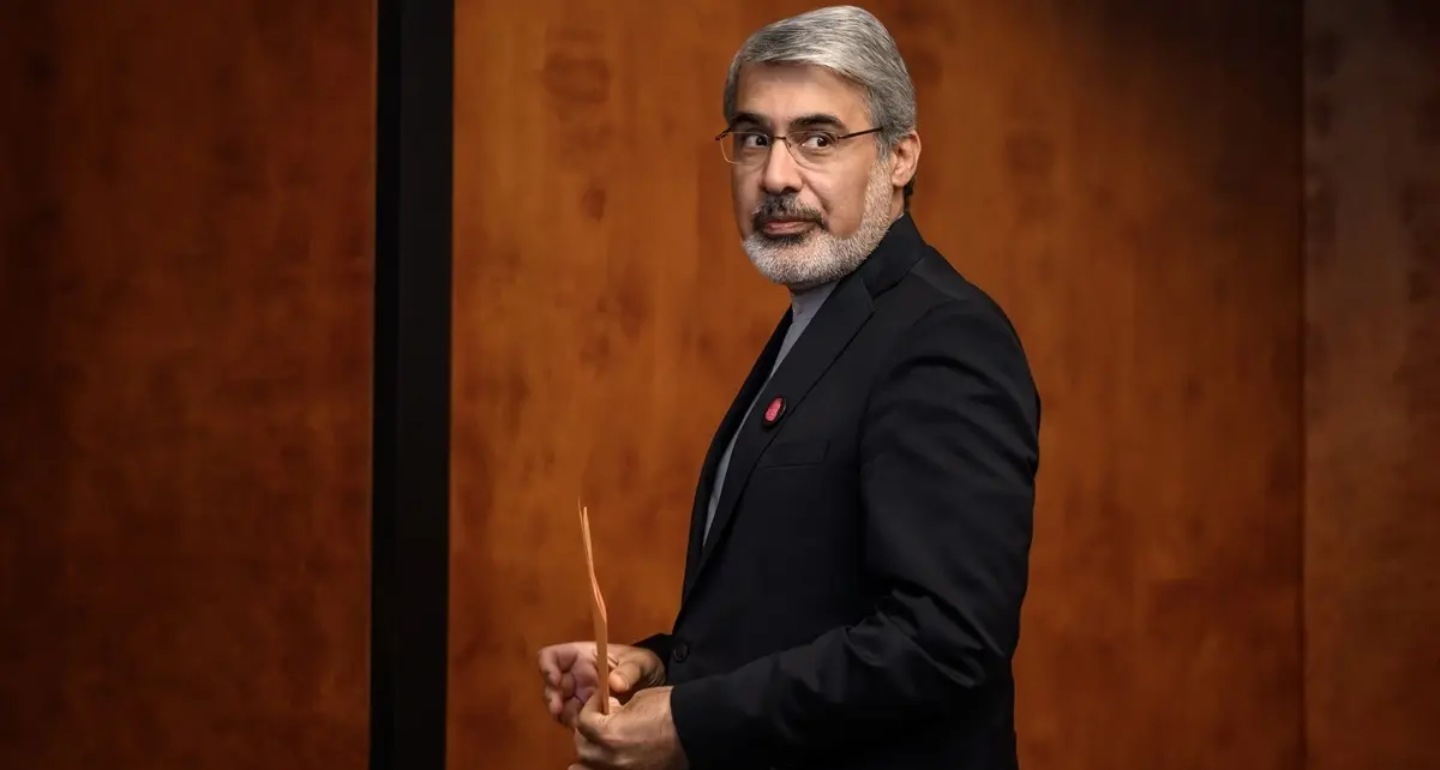
Source: Getty
Ongoing uncertainty in the Middle East allows Moscow to both increase its influence in Tehran and continue to enjoy the financial windfall of higher oil prices.
An end to the war between the United States and Iran would not be great news for Moscow. The oil price spike caused by the fighting helped Russia solve some of its financial problems, and delayed spending cuts that otherwise seemed inevitable. The fighting has also distracted the world from Ukraine, and interrupted the flow of U.S. weapons to Kyiv.
For the moment, however, all agreements between Washington and Tehran have been preliminary, or have quickly collapsed. This sort of chaos is to Russia’s benefit. Above all, the Kremlin does not want the two sides to reach a comprehensive deal.
Undoubtedly, the biggest boon to Russia from the war in Iran has been the surge in oil prices. In May alone, Russia received an additional 175 billion rubles ($2.3 billion) in oil and gas revenue. While this could not offset Russia’s ballooning budget deficit, it did mean officials were able to postpone some planned spending cuts.
The effect of the war on the Russia-Iran relationship, though, offers a mixed picture. On the one hand, Russia had to halt building the Bushehr nuclear power plant in Iran, and evacuate its staff. It also had to pause other construction projects, including the Rasht–Astara railroad, and the Sirik power station. Resuming work at these sites will be complicated because Iran’s infrastructure has been so badly damaged.
On the other hand, the military action and the U.S. blockade have forced Iran to ramp up cooperation with Russia in other areas. Unable to fully use its ports in the Gulf, Tehran has sought out other ways of accessing the wider world. One of these has been trading across the Caspian Sea.
According to the New York Times, 2 million tons of Russian wheat—which used to be shipped via the Black Sea—is now being sent to Iran via the Caspian Sea. Russia’s Minister of Transport has said grain exports to Iran have risen by 81 percent so far in 2026. And all Russian ports in the Caspian region have seen record-high turnover between January and May: In Astrakhan and Olya it has doubled, while in Makhachkala it jumped 50 percent.
While the potential for the Russia-Iran trade is limited by the relatively small amount of goods the two countries want to buy from each other, the growth in freight traffic has been a political win for Moscow. The more Iran redirects trade from the Gulf to the Caspian Sea, the more dependent on Russia it becomes.
It’s a similar picture when it comes to arms sales. While the war has not turned Russia into Iran’s main supplier, Moscow’s position has been significantly bolstered. Russia is currently supplying drone parts to Tehran—including those for the Geran-2 drones that were developed by Moscow based on Iran’s Shahed-136s. All this trade takes place via the Caspian, which Iran is trying to turn into a “road of life” bringing in food and arms.
A truce between Washington and Tehran would likely mean Russia lost the biggest boon from the fighting: elevated energy prices. After a framework deal between the United States and Iran was announced on June 15, crude prices dropped. This happened again on June 22 when the United States suspended sanctions and authorized Iranian oil sales for sixty days.
Undoubtedly, the unblocking of the Strait of Hormuz and the lifting of U.S. sanctions on Iranian oil would have a big impact on energy markets. After all, the sanctions have been in place since the start of the 2010s (except between a U.S.-Iran deal in 2016, and U.S. President Donald Trump ditching that deal in 2018). If they stay lifted, Iran will be able to supply crude to countries around the world—not just China.
Before Trump reimposed sanctions, Iran was exporting about 2.7 million barrels a day. In recent years, its annual exports were about 1.5 million barrels a day. Of course, such volumes are not enough to shock the market, but even expectations of the return of Iranian oil would put downward pressure on prices.
In informal conversations, Russia’s Foreign Ministry presented two arguments against the 2015 deal between Iran and the United States negotiated under President Barack Obama: the resumption of Iranian oil exports and the risk of Tehran becoming more oriented toward the West. The latter is deeply unlikely today given the damage inflicted by the recent U.S. military campaign, as well as the collapse in relations with the European Union. Nor will Western investors be in a hurry to put money into Iran even if the bulk of Western sanctions are lifted (memories are too fresh of what happened when Trump tore up Obama’s deal in 2018).
Nevertheless, the return of significant oil export revenue could give Tehran the opportunity to improve its economic position. At the very least, Tehran could aspire to Asian investment, which tends to be more willing to work with regimes like the Iranian one. And that means Iran will be able to diversify its economic ties and reduce its dependence on Russia.
While the current negotiations between Tehran and Washington have been something of a roller coaster, the two sides have managed to agree a road map for reaching a final deal, establish a mechanism to help achieve a ceasefire in Lebanon, set up an incident prevention line for the Strait of Hormuz, and lift U.S. sanctions on Iranian oil.
At the same time, the situation remains delicate. Meetings are cancelled and postponed; fighting regularly resumes in Lebanon; Trump periodically threatens new attacks; and there have been several reports that Tehran is reimposing its blockade of the Strait of Hormuz.
This sort of messy status quo—which is somewhere between a state of war and a state of peace—is firmly in Moscow’s interests. On the one hand, the uncertainty in the Persian Gulf means oil prices will not fall too far. On the other hand, the conflict does not look like it will become a full-scale war that could damage Russia’s broader interests (jeopardizing investment in other Gulf states and destabilizing neighboring states in the South Caucasus and Central Asia). Even if Tehran and Washington do manage to reach a comprehensive agreement, doubts about its longevity are almost certain to stymie both the development of Iranian contacts with the West and the return of oil prices to prewar levels.

Expert on Iranian foreign and domestic policies, Islamism, and Russia's policy in the Middle East
Recent Work
Nikita Smagin
Nikita Smagin
Carnegie does not take institutional positions on public policy issues; the views represented herein are those of the author(s) and do not necessarily reflect the views of Carnegie, its staff, or its trustees.

When faced with fuel shortages in the past, Central Asian governments could always count on additional supplies from Moscow. That safety net no longer exists.

Galiya Ibragimova
Reading the purported correspondence of celebrity Ksenia Sobchak sheds light on her role within the system, and how journalism and politics function in Putin’s Russia.
Vladislav Gorin
When political power is concentrated in the hands of a small circle of people, a country invariably ends up with technological stagnation.
Aleksei Kiselev

Two divergent trends—Putin’s hardline vision of how to prosecute the war in Ukraine, and a growing desire for change in Russia—could tear the regime apart.

Tatiana Stanovaya
Official discussions about mini oil refineries are unlikely to come to anything—but the mere fact they’re happening reveals the regime is failing to deliver a functioning economy.

Sergey Vakulenko